🌐
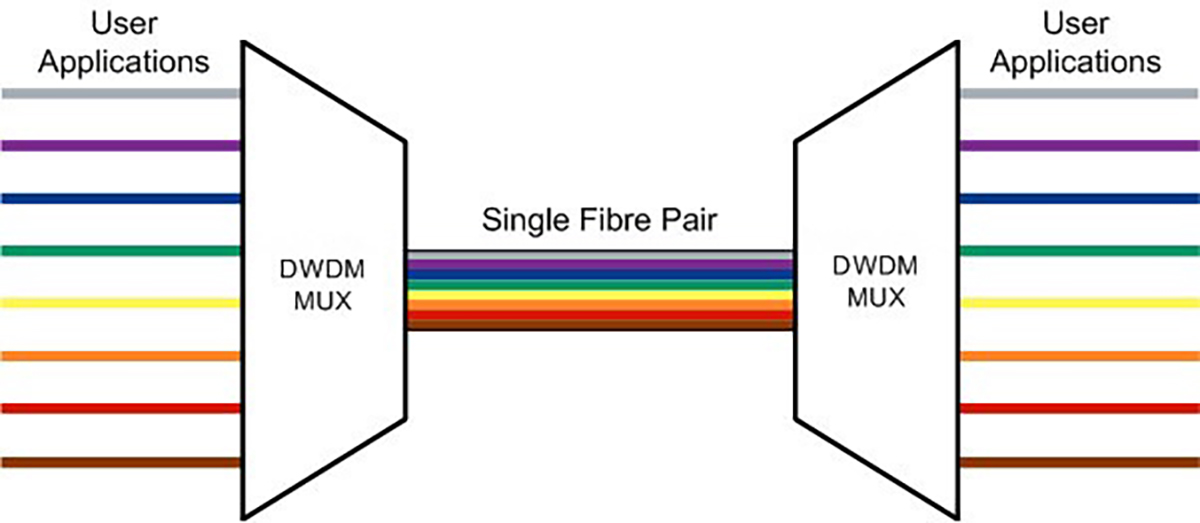
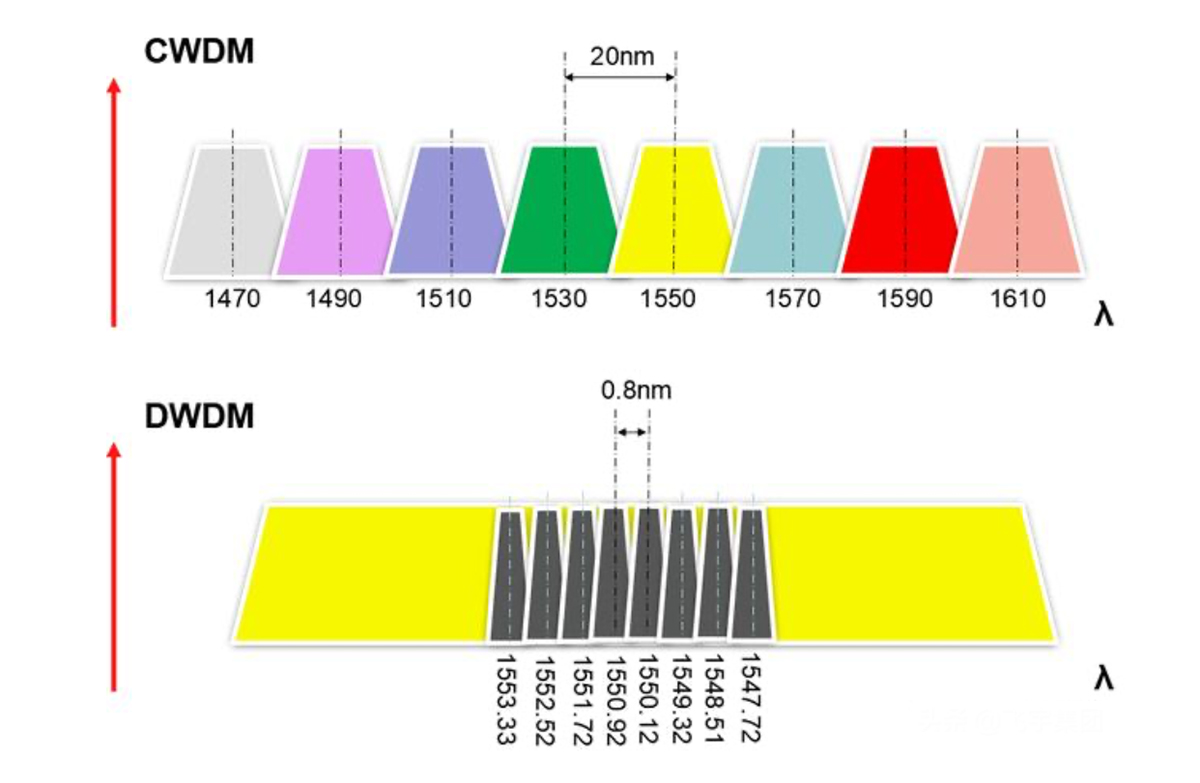
Dense wavelength-division multiplexing (DWDM) is an optical fiber multiplexing technology used to increase the bandwidth of existing fiber networks. It combines data signals from different sources over a single pair of optical fiber, while maintaining complete separation of the data streams.
⚡
DWDM in optical fiber systems deployed today achieves a throughput of 100 Gbps. When used with network management systems and add-drop multiplexers, carriers can adopt optically based transmission networks, meeting growing bandwidth demand at a significantly lower cost than installing new fiber.
📡
Wavelength channels can be implemented through an array of infrared laser beams. Each channel carries 100 Gbps with up to 192 channels per fiber pair, translating to 19.2 terabits per second capacity. Each channel can use different data formats and rates without interference.
🛠️
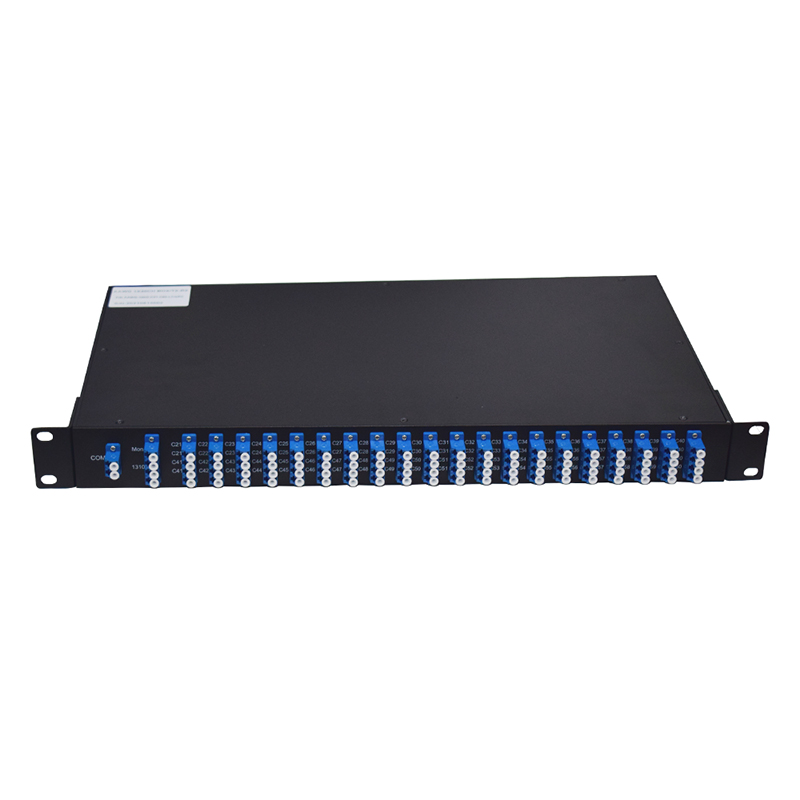
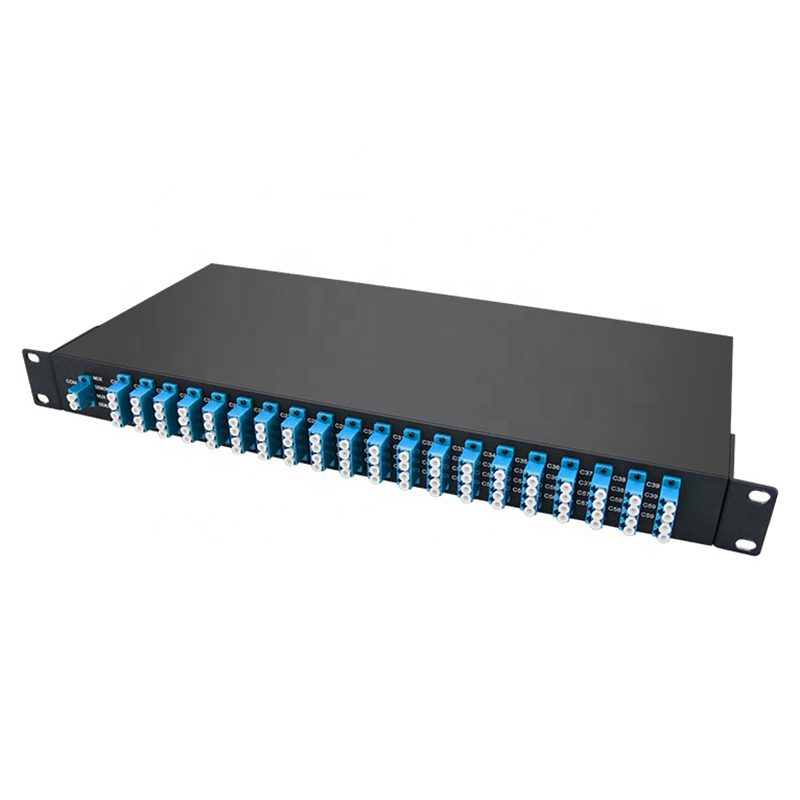
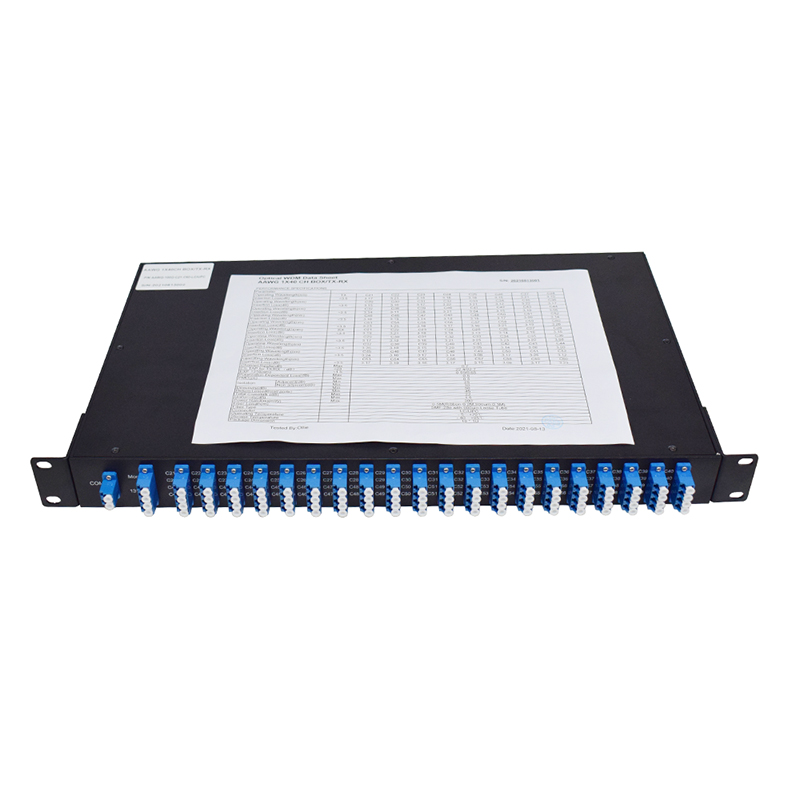
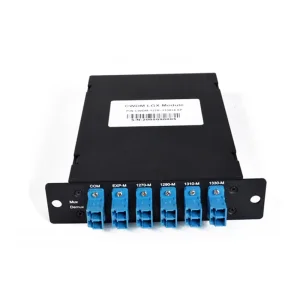
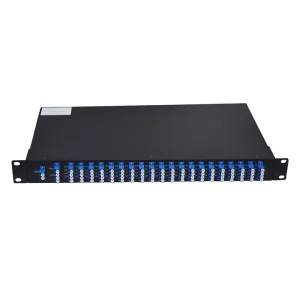
The 40CH Mux Demux DWDM is a high-density, low-loss, standalone passive device based on AAWG (Athermal Arrayed Waveguide Grating) technology. It supports architectures from simple point-to-point to amplified ring configurations.
Frequently Asked Questions
Q: What is the primary benefit of DWDM technology?
A: DWDM significantly increases the bandwidth of existing fiber networks by multiplexing multiple data signals over a single pair of optical fiber while keeping them completely separated.
Q: What is the maximum capacity of a DWDM fiber pair?
A: Modern DWDM systems can support up to 192 channels per fiber pair, with each channel carrying 100 Gbps, resulting in a total capacity of approximately 19.2 terabits per second.
Q: What technology is used in the 40CH Mux Demux?
A: The 40CH Mux Demux is based on AAWG (Athermal Arrayed Waveguide Grating) technology, which provides a high-density and low-loss passive solution.
Q: What are the operating temperature requirements for this device?
A: The device is designed to operate in temperatures ranging from -5 to 65°C, with a storage temperature range of -40 to 85°C.
Q: Can this system support different types of data formats?
A: Yes, because the channels are physically distinct and do not interfere with each other, each channel can use different data formats and transmit at different data rates.
Q: Is DWDM cost-effective for network expansion?
A: Yes, it allows carriers to meet growing bandwidth demands at a significantly lower cost compared to the installation of new physical fiber lines.
 KOCENT OPTEC