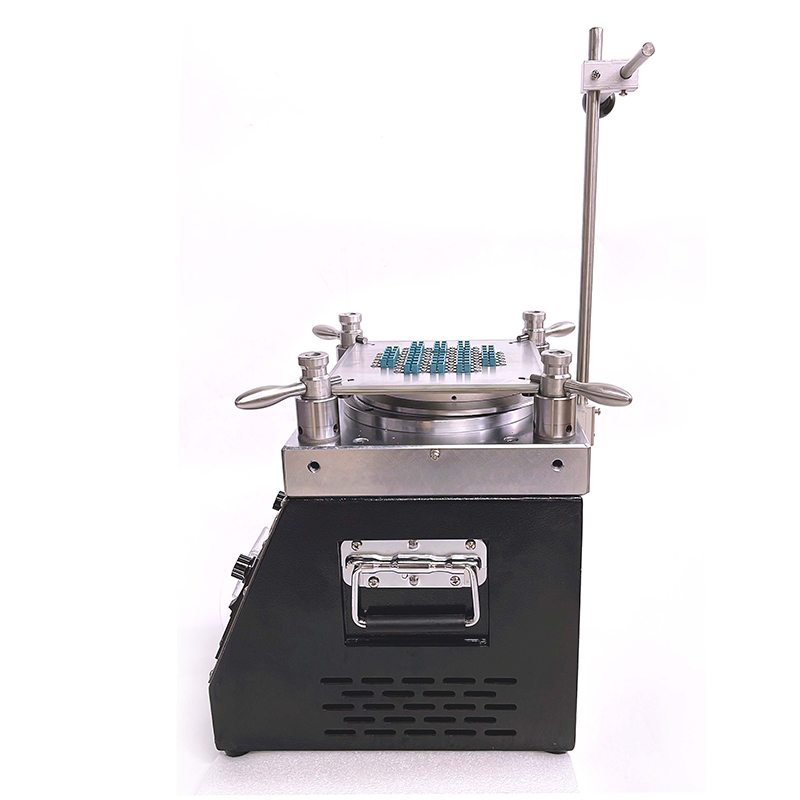
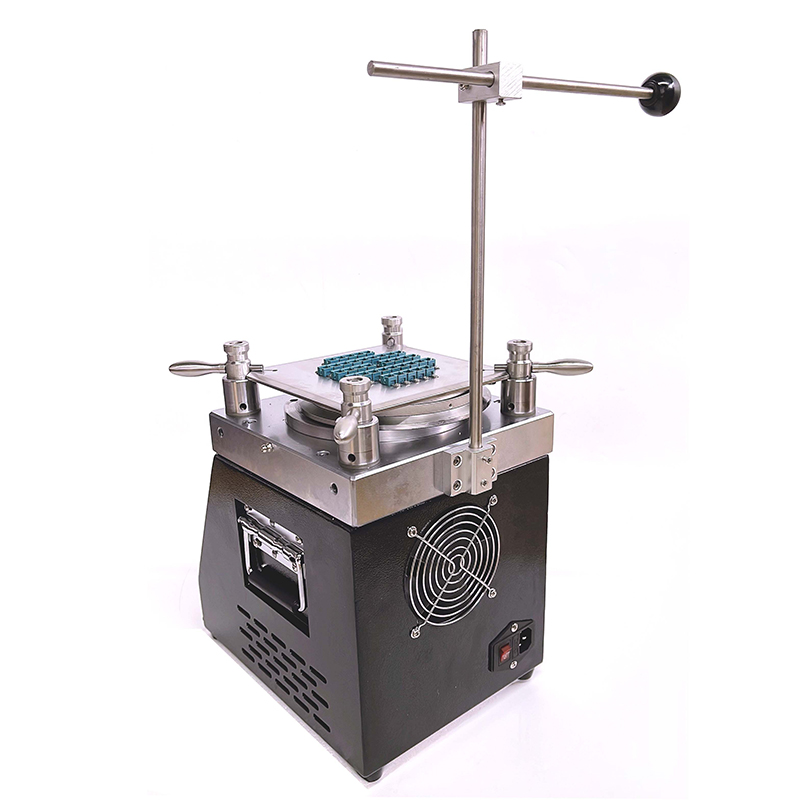
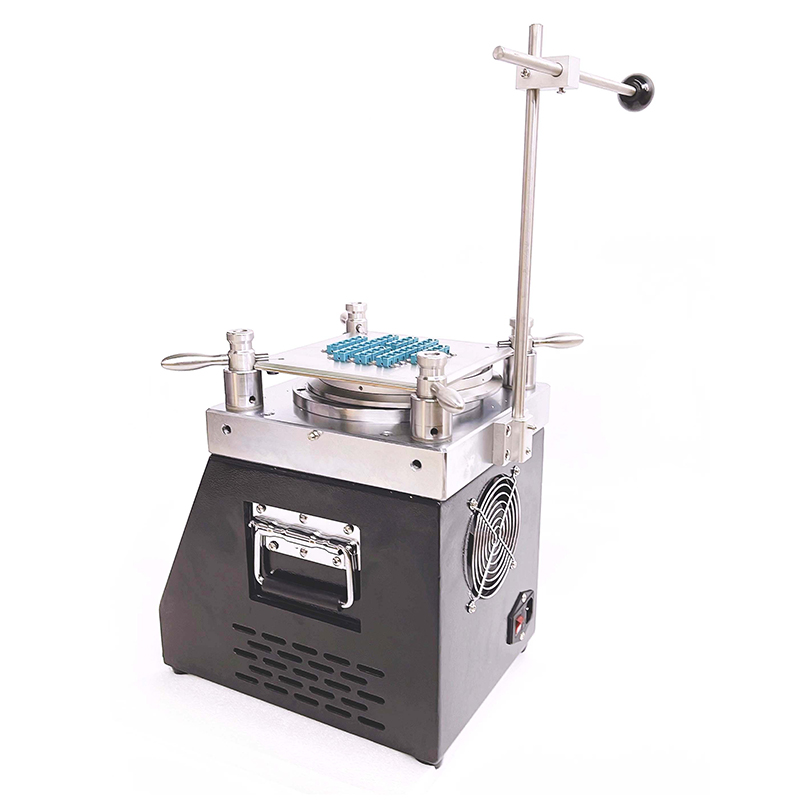
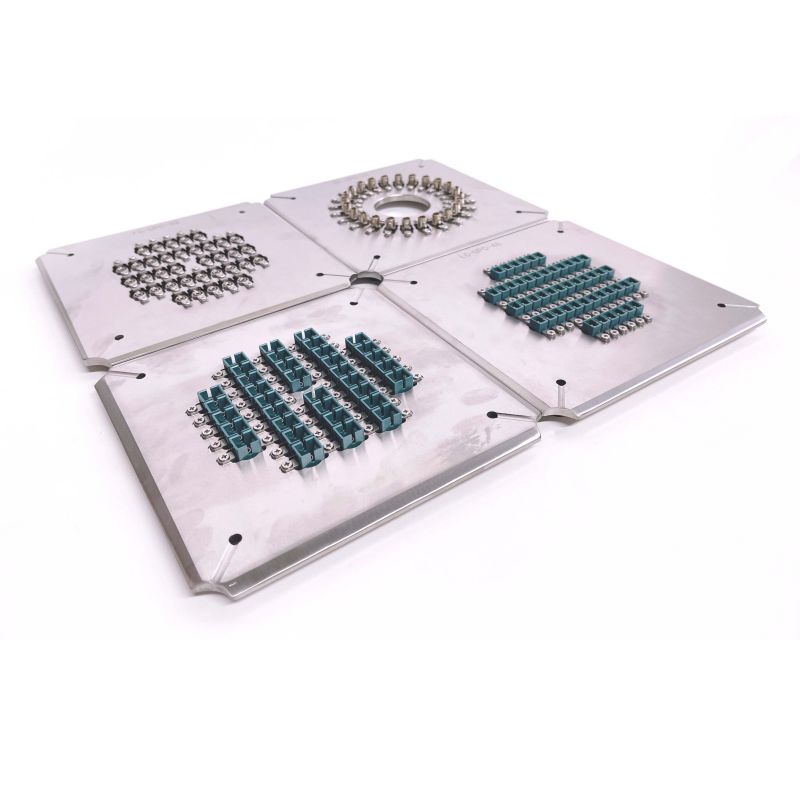
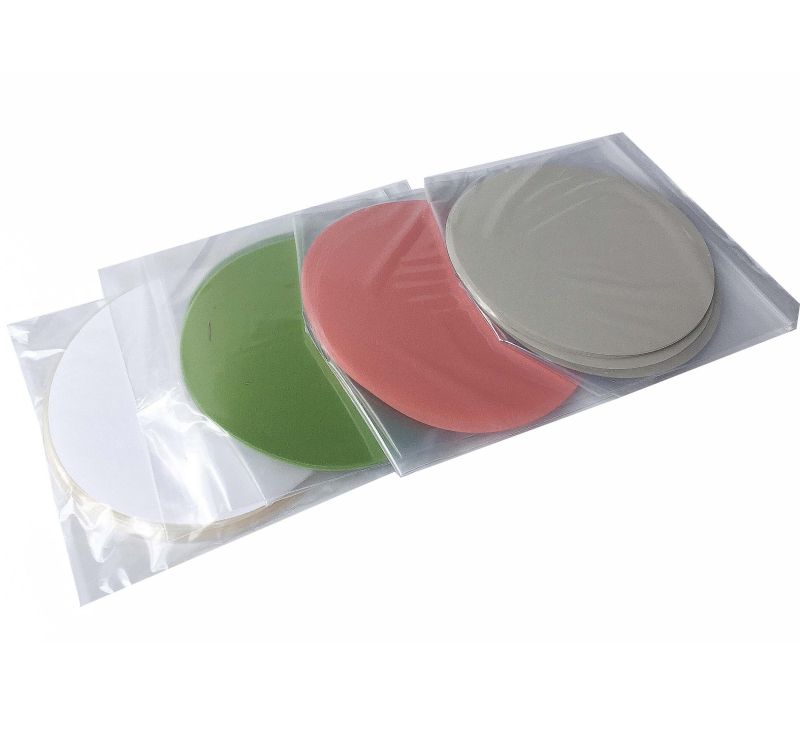
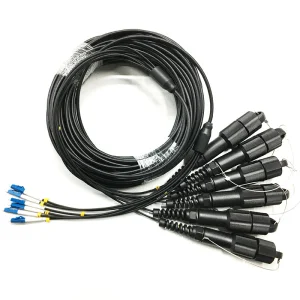
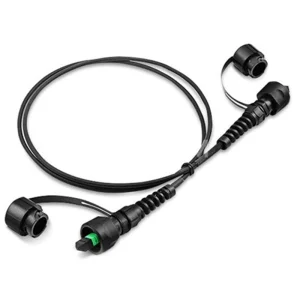
The optical fiber polishing machine controls revolution and rotation by two motors, so as to achieve the effect of 8-shaped polishing. The four-corner pressurized optical fiber grinder applies pressure by polishing the four corners of the fixture, and needs to be achieved by adjusting the spring pressure of the four posts. The four-corner pressurized polishing machine has uniform pressure on the four corners, so the quality of the polishing product is greatly improved compared with the center pressurized polishing machine; and the polishing fixtures and fixtures generally have 20 heads and 24 heads, and the production efficiency is also higher than that of the center pressurized polishing machine. Greatly improved.
◈
The optical fiber polishing machine is mainly used to process the optical fiber end surface of optical fiber products, such as optical fiber connectors (jumpers, pigtails, quick connectors), energy optical fibers, plastic optical fibers, embedded short ferrules of devices, etc.
◈
It is widely used in the optical communication industry.
◈
A common method is that several optical fiber polishing machines and curing furnace end detectors, crimping machines, testers and other equipment tools form one or more production lines, which are used to produce optical fiber jumpers, pigtails and passive devices.
1Machinable ceramics (including extremely hard ZrO2), quartz, glass, metal, plastic and other materials.
2Independent compound motions of rotation and revolution ensure the uniformity and consistency of polishing quality. The revolution can be adjusted steplessly (15-220rpm).
3Four-corner pressurized design with arbitrarily settable polishing time based on requirements.
4High precision performance: surface runout of the polishing plate at 100 rpm is less than 0.015 mm.
5Automatically records polishing times to guide operators in adjusting polishing paper usage.
6Fast and convenient operation for pressing, unloading, and replacing polishing pads.
7Stable processing quality, low repair rate, and high production efficiency for integrated lines.
8Customizable forward and reverse functions according to customer requirements.
9Enhanced durability with polymer waterproof materials to seal electrical appliances and chassis.
10Optional digital display of revolution speed for precise quality control.
Frequently Asked Questions
Q: What is the advantage of the four-corner pressurized polishing machine?
A: It provides uniform pressure across the fixture, significantly improving product quality and production efficiency compared to center-pressurized machines.
Q: What types of materials can this machine polish?
A: It can process various materials including ceramics (ZrO2), quartz, glass, metal, and plastic.
Q: Which fiber optic connectors are compatible with this equipment?
A: It supports a wide range of connectors including FC, SC, ST, LC, MU, and special types like MT, MT-RJ, and SMA905 for both PC and APC finishes.
Q: Can the polishing speed be adjusted?
A: Yes, the revolution speed is steplessly adjustable within a range of 15-220rpm to meet different process requirements.
Q: How does the machine handle water and moisture during operation?
A: The machine utilizes polymer waterproof materials to ensure that the chassis and electrical components are completely sealed and protected.
Q: Is it possible to monitor the life of the polishing paper?
A: Yes, the machine automatically records the number of polishing cycles, allowing operators to adjust timing and replace paper effectively.
 KOCENT OPTEC