⚙️
Reliable Performance:
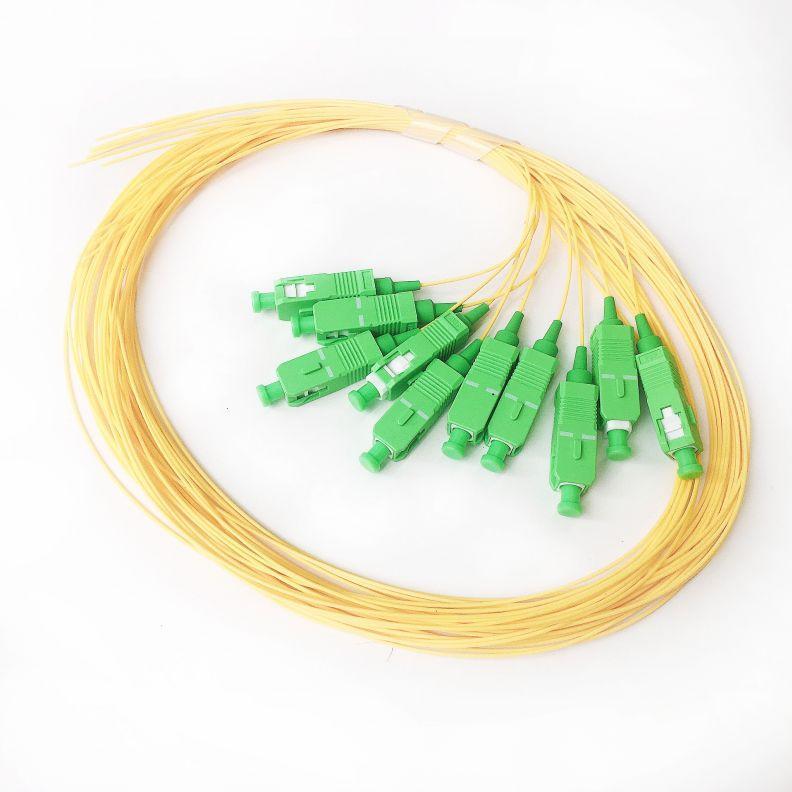
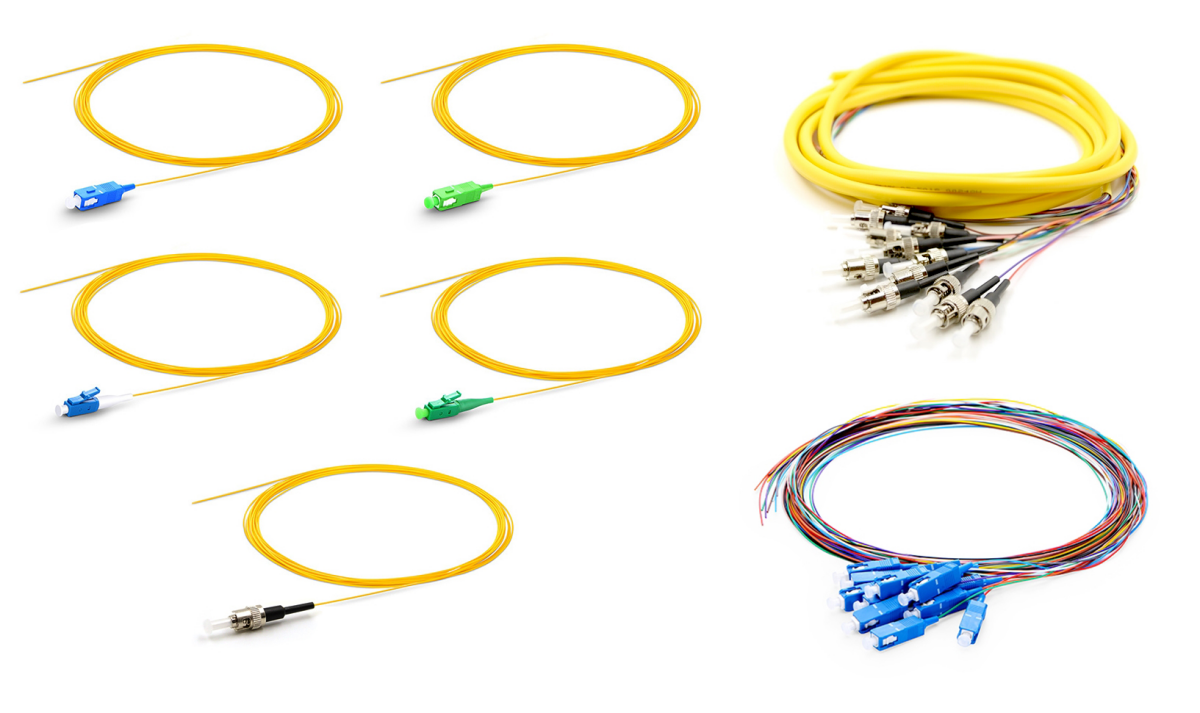
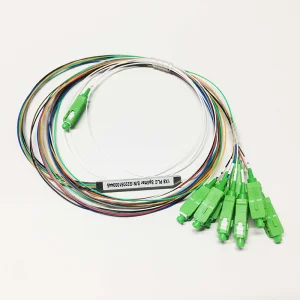
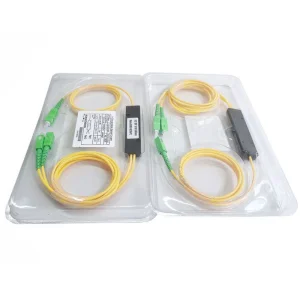
Fiber Optical Pigtails are ultra-reliable components featuring low insertion loss and return loss. Available in simplex or duplex cable configurations.
🔗
Factory Terminated:
Terminated with a factory-installed connector on one end, allowing the other end to be melted with optical fiber cables for equipment linking.
🛠️
Splicing Ready:
Utilized to terminate fiber optic cables via fusion or mechanical splicing. High-quality pigtails offer the best performance for terminations.
📦
Versatile Use:
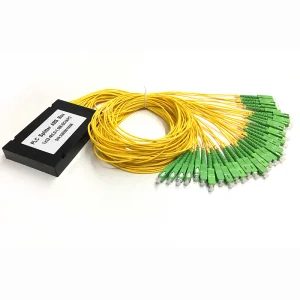
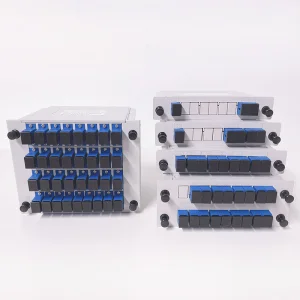
Commonly found in fiber optic management equipment like ODF, fiber terminal boxes, and distribution boxes.
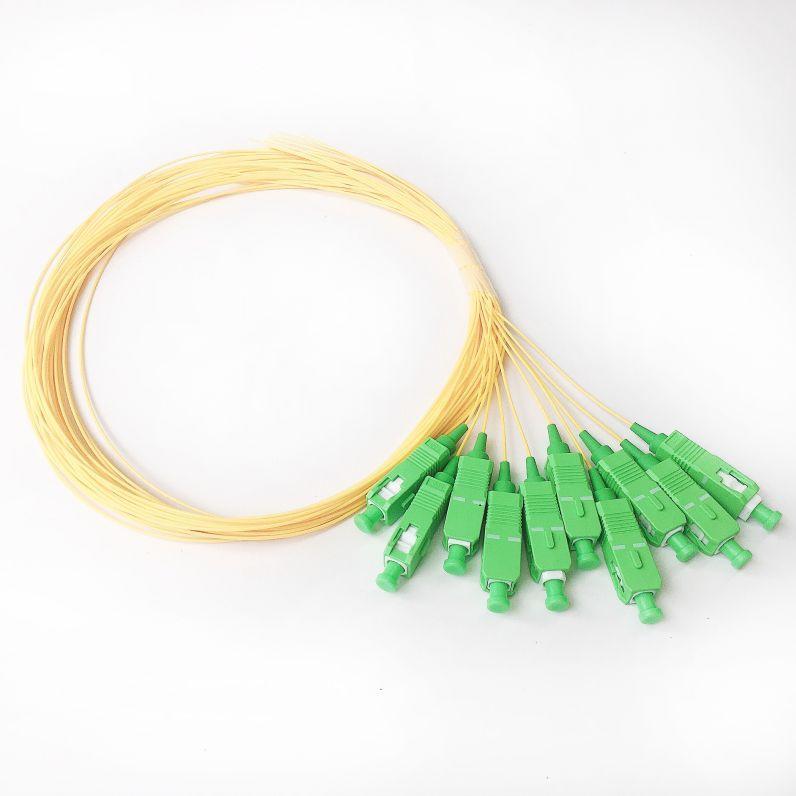
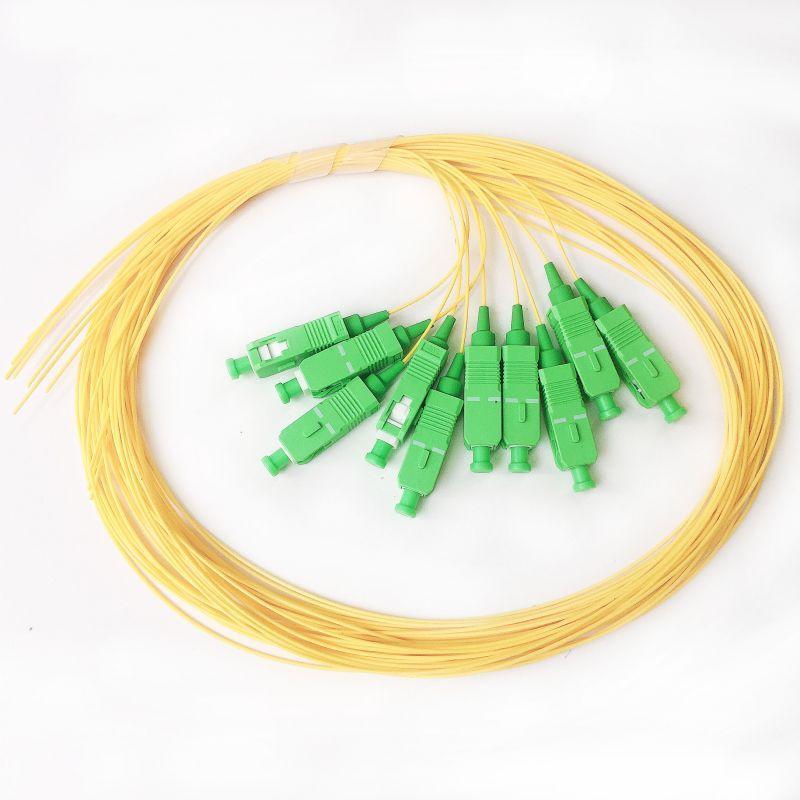
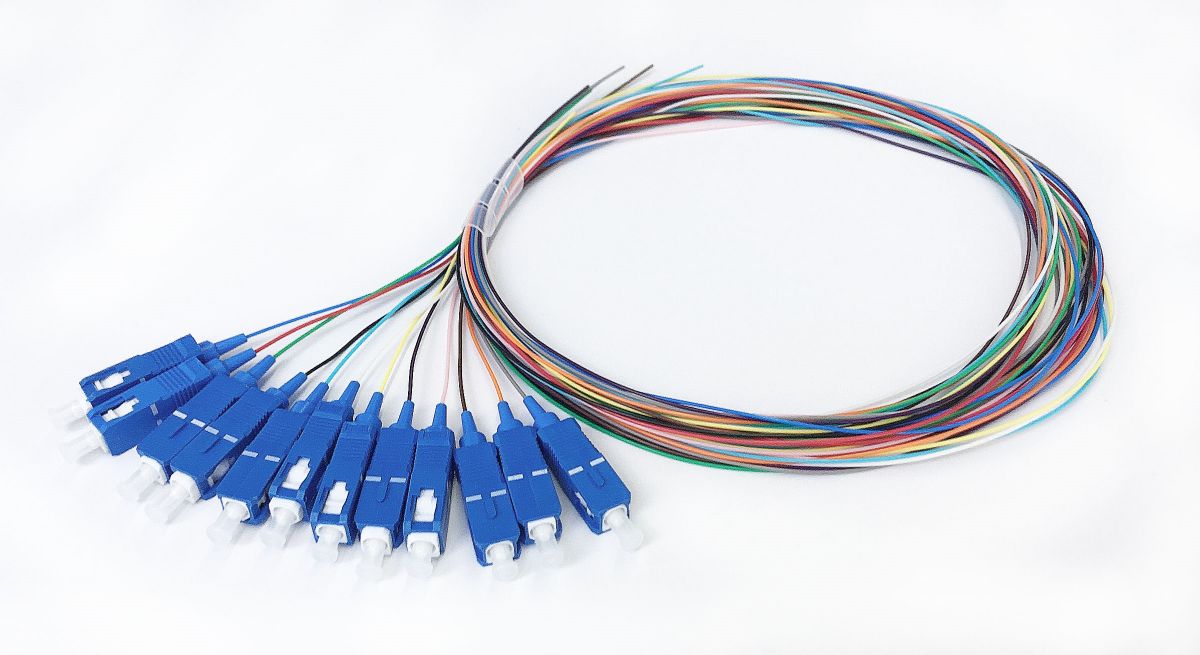
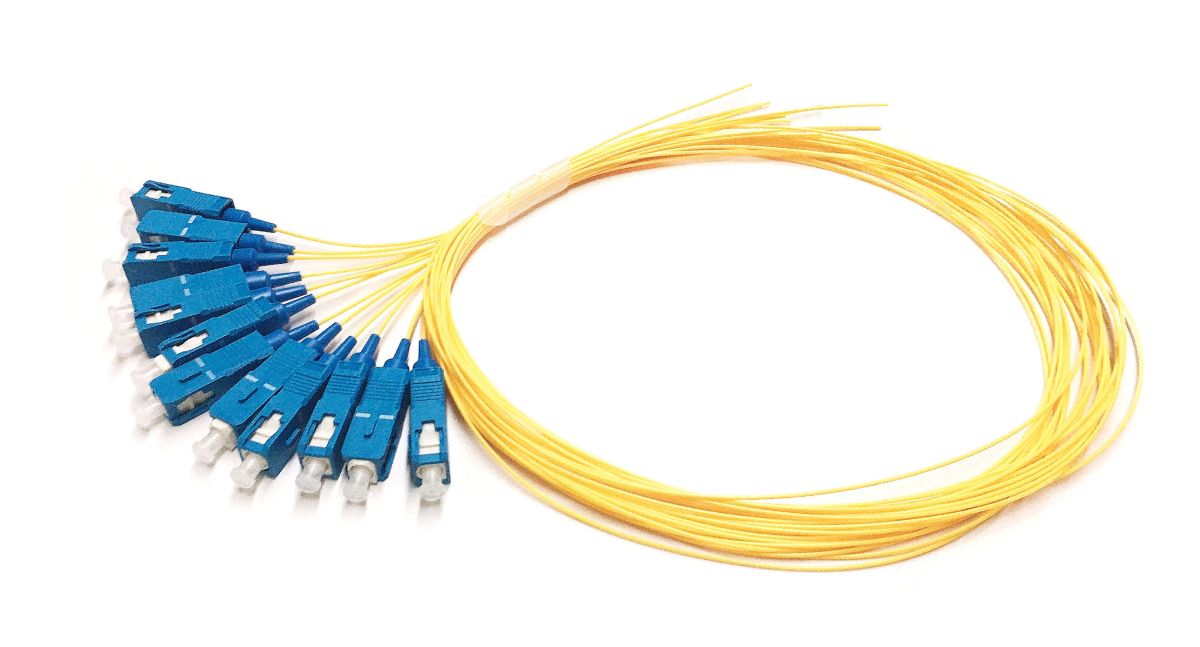
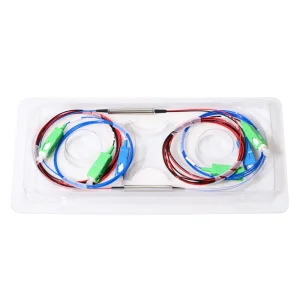
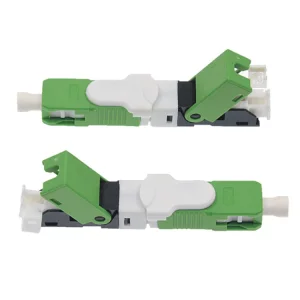
A fiber pigtail is a single, short, usually tight-buffered fiber optic cable with a factory-installed connector on one end and un-terminated fiber on the other. The SC/APC connector features a threaded body designed for high-vibration environments, commonly used with single-mode and polarization-maintaining optical fibers.
SC/APC fiber optic pigtails are a common type, featuring one side with an SC/APC connector. Termination connectors can be Single mode UPC, APC, or Multimode PC. Cable options include single mode G652D, G657A1, G657A2, G657B3, or Multimode OM1 through OM5.
Frequently Asked Questions
1. What is the primary purpose of a fiber optic pigtail?
Fiber optic pigtails are used to terminate fiber optic cables via fusion or mechanical splicing, allowing the connectorized end to be linked to equipment like patch panels or switches.
2. Why is SC/APC preferred for high-vibration environments?
The SC/APC connector is designed with a threaded body and a secure coupling mechanism that ensures stable connectivity even in environments prone to movement or vibration.
3. What is the difference between the two ends of a pigtail?
One end is factory-terminated with a high-quality connector (like SC/APC), while the other end consists of exposed fiber ready for splicing to a feeder cable.
4. Which fiber types are compatible with these pigtails?
They support a wide range of fibers including Single Mode (G652D, G657 series) and Multimode (OM1, OM2, OM3, OM4, OM5) to suit different network requirements.
5. What are the typical insertion and return loss values?
These pigtails offer high performance with an insertion loss of ≤ 0.3dB and a return loss of ≥ 55dB for APC polishing, ensuring minimal signal degradation.
6. Where are these pigtails usually installed?
They are commonly installed inside fiber management hardware such as Optical Distribution Frames (ODF), terminal boxes, and distribution boxes in data centers and telecom hubs.
 KOCENT OPTEC