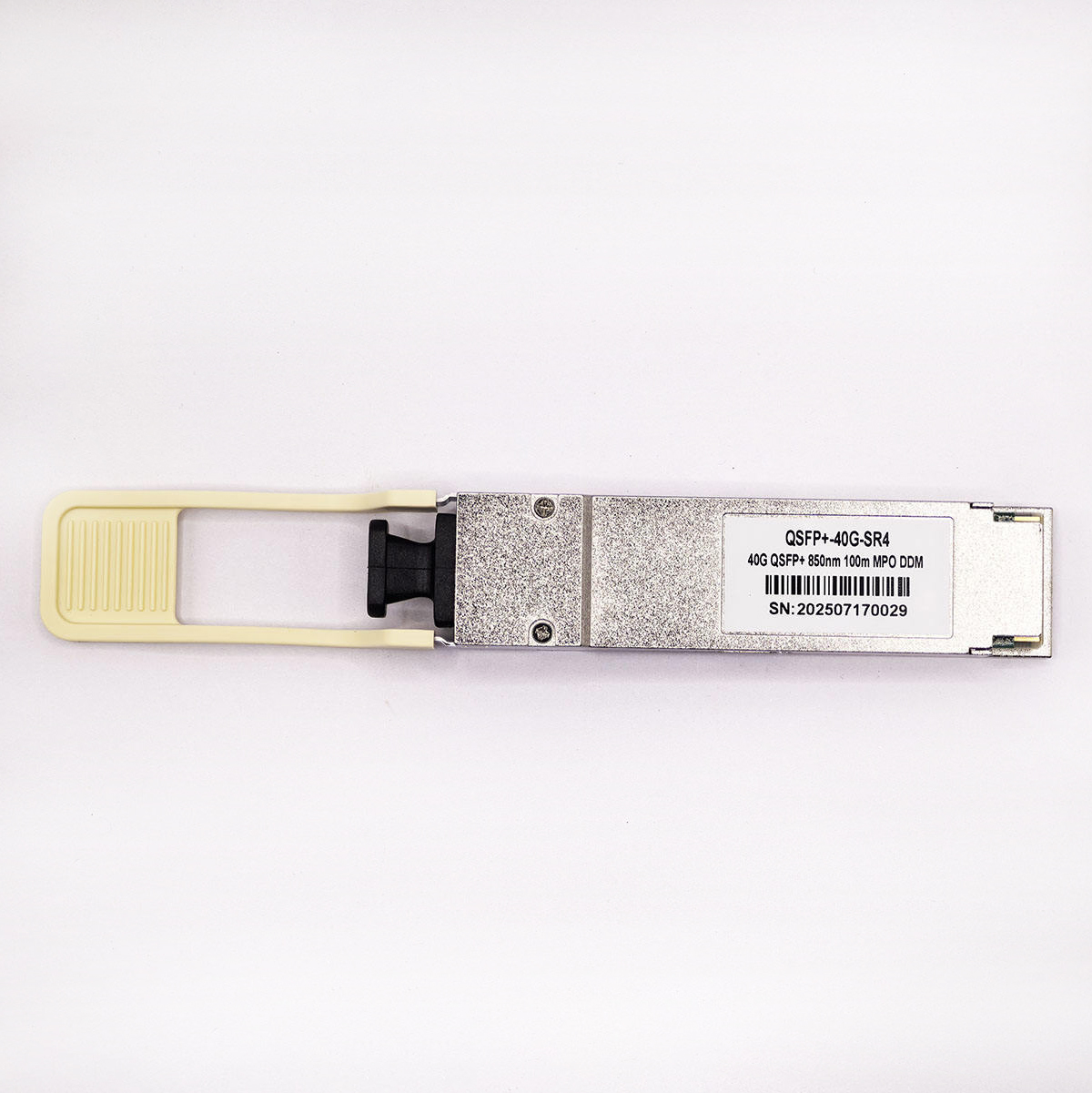
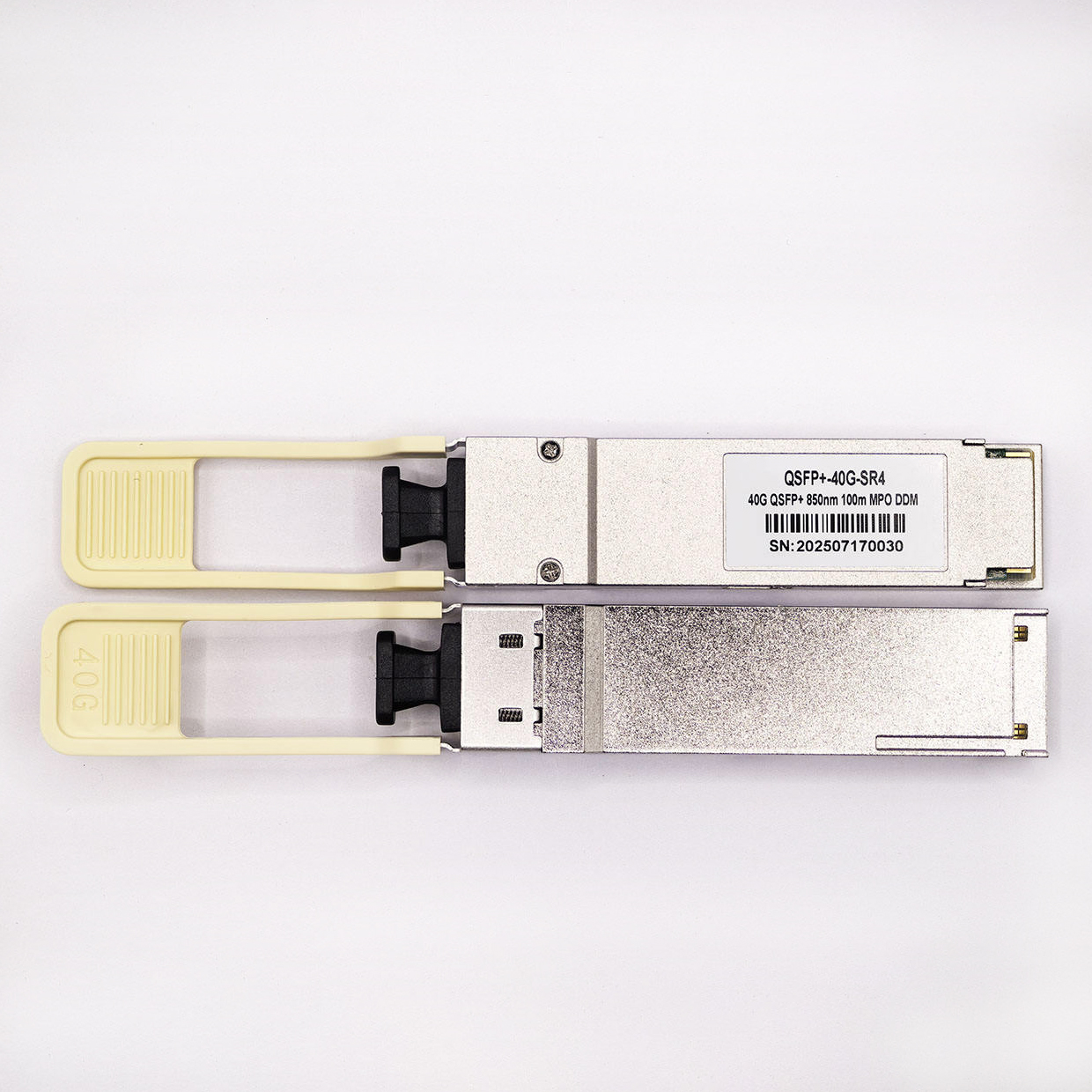
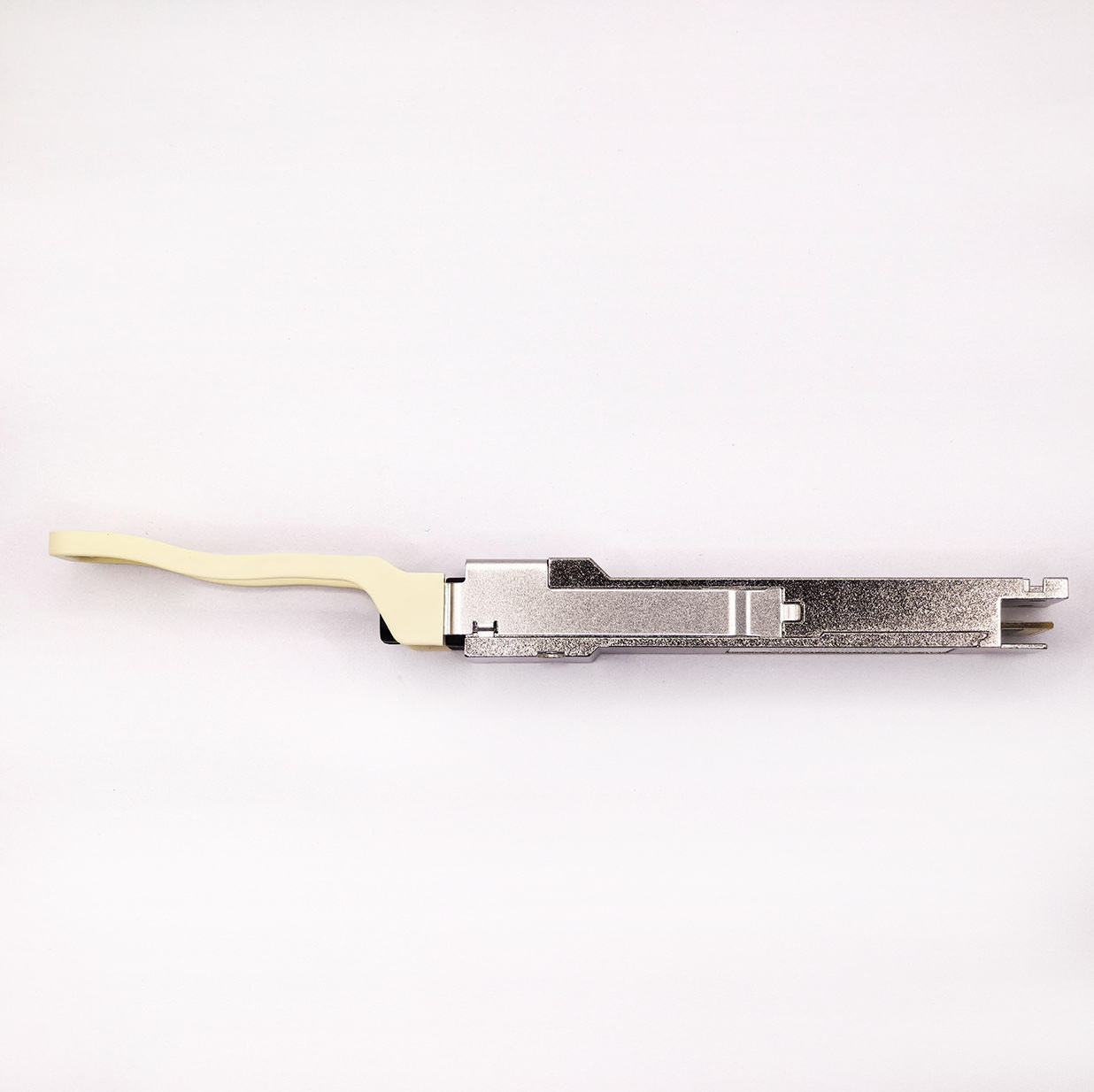
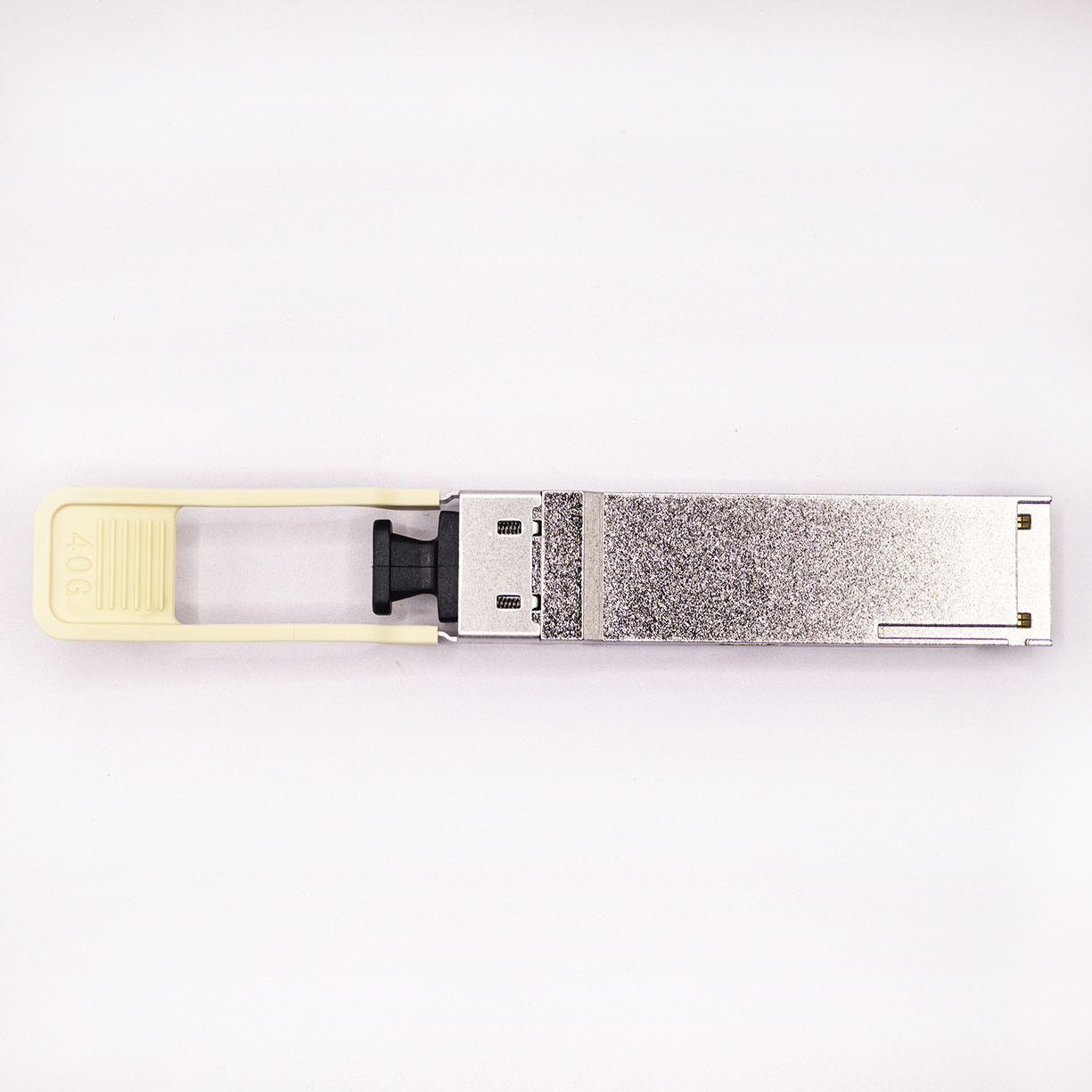
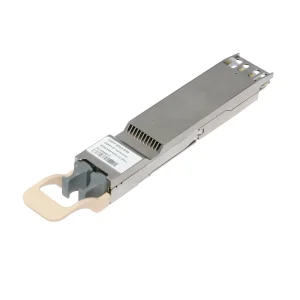
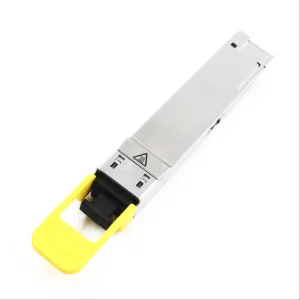
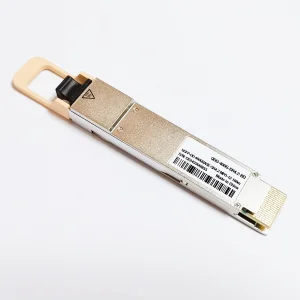
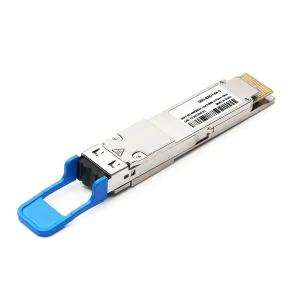
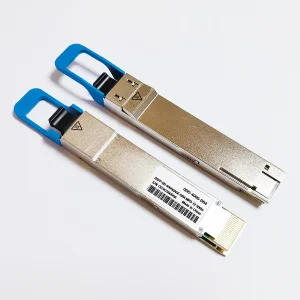
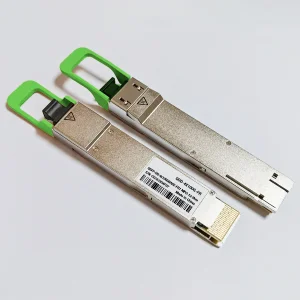
Cheap KCO QSFP+ 40G SR4 40Gb/s QSFP+ MMF 100M MPO Connector Transceiver with DDM Manufacturer, Factories

High Channel Capacity: 40 Gbps per module Up to 11.1Gbps Data rate per channel Maximum link length of 100m links on OM3 multimode fiber Or 150m links on OM4 multimode fiber High Reliability 850nm VCSEL technology Electrically hot-pluggable Digital diagnostic SFF-8436 compliant Case operating temperature range:0°C to 70°C Power dissipation < 0.7 W

Product Description

Small Form-factor Pluggable (SFP)
SFP is a compact, hot-pluggable network interface module format used for both telecommunication and data communications applications. An SFP interface on networking hardware is a modular slot for a media-specific transceiver, such as for a fiber-optic cable or a copper cable.
Quad Small Form-factor Pluggable (QSFP)
QSFP is a type of transceiver module used for high-speed data transmission in networking devices, particularly in data centers and high-performance computing environments. It is designed to support multiple channels (typically four) and can handle data rates ranging from 10 Gbps to 400 Gbps, depending on the specific module type.
High-Density
QSFP modules are designed to be compact, allowing for a high number of connections in a relatively small space.
Hot-Pluggable
They can be inserted and removed from a device while it's powered on, without causing disruptions to the network.
Multiple Channels
Typically feature four channels, each capable of transmitting data, allowing for higher bandwidth.
Versatile Rates
Variants include QSFP+, QSFP28, QSFP56, and QSFP-DD, supporting speeds from 40Gbps to 400Gbps.
OP-QSFP+-01 Technical Specifications
The OP-QSFP+-01 is designed for use in 40 Gigabit per second links over multimode fiber. They are compliant with the QSFP+ MSA and IEEE 802.3ba 40GBASE-SR4 standards.
QSFP Module
Transmitter & Receiver Details
The optical transmitter portion incorporates a 4-channel VCSEL (Vertical Cavity Surface Emitting Laser) array, a 4-channel input buffer, laser driver, diagnostic monitors, and control blocks. The control interface utilizes a Two Wire Serial (TWS) interface for clock and data signals.
The optical receiver portion incorporates a 4-channel PIN photodiode array, a 4-channel TIA array, and diagnostic monitors. Results for optical input power are available through the TWS interface. Alarm and warning thresholds are established for monitored attributes, with flags and interrupts generated when attributes fall outside defined thresholds.
Frequently Asked Questions
Q1: What is the main difference between SFP and QSFP?
SFP supports a single channel, while QSFP (Quad SFP) supports four channels, allowing for much higher data rates and density in networking hardware.
Q2: What transmission speeds does the OP-QSFP+-01 support?
The OP-QSFP+-01 is specifically designed for 40 Gigabit per second (40Gbps) links.
Q3: Is this module compatible with single-mode fiber?
No, according to the specifications, the OP-QSFP+-01 is designed for use over multimode fiber (40GBASE-SR4).
Q4: Does the module support real-time monitoring?
Yes, it features diagnostic monitors for temperature, voltage, bias current, and optical power, accessible via the TWS (Two Wire Serial) interface.
Q5: Can I replace the module while the system is running?
Yes, QSFP modules are hot-pluggable, meaning they can be inserted or removed without powering down the device or disrupting the network.
Q6: What happens if there is a loss of input signal?
The module features squelch functions for loss of signal (LOS), and it will generate interrupts to alert the system of the fault condition.

Related Products