What Is an LC FC Patch Cord?

Time:2026-10-31 Author:Ethan
0%

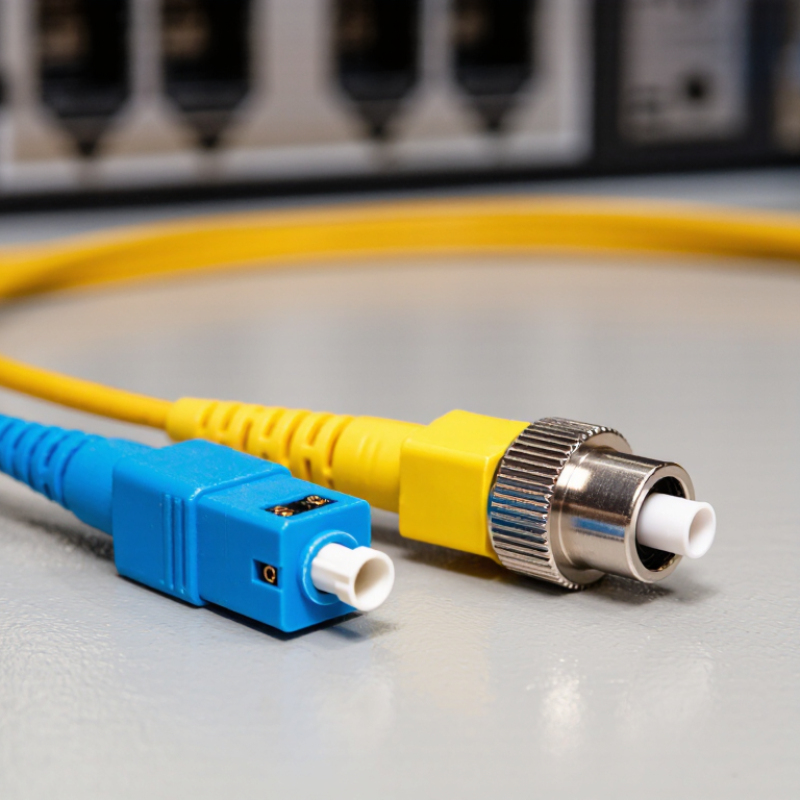
An Lc Fc Patch Cord joins two different connector interfaces: a compact LC connector on one end and a threaded FC connector on the other. It provides a direct link between equipment or panels with matching ports. The LC end uses a small 1.25-millimeter ferrule. The FC end secures with a screw-on coupling, which can help maintain a stable connection when properly installed. Small part, important job.

Jim Hayes, founder of the Fiber Optic Association, emphasizes a practical field rule: “Inspect and clean connectors before mating.” Connector cleanliness matters because dust or oil on an end face can increase signal loss. A technician should also confirm the fiber type, polish, and equipment requirements before choosing a cord. Single-mode and multimode fibers are not interchangeable for every application. Neither are UPC and APC connector finishes.

A typical Lc Fc Patch Cord has a short length of fiber cable, protective jackets, and the two connector types. You may see it in data centers, telecom rooms, or test setups, where LC and FC ports must communicate. Check the required length and polarity, too. A cord that fits physically may still be wrong for the link. That detail is easy to miss. Even careful installers can overlook it when a room is busy. Inspect both end faces, clean them with suitable tools, and verify the link after installation. This guide explains the cord’s parts, common variants, and selection checks. It also notes a limitation: the right patch cord cannot fix a mismatched system.
What Is an LC FC Patch Cord?

LC-to-FC Patch Cord Basics: 1.25 mm LC and 2.5 mm FC Ferrules

An LC-to-FC patch cord connects equipment with different optical interfaces: a compact LC connector at one end and a threaded FC connector at the other. The key size difference is inside each connector. LC uses a 1.25 mm ferrule, while FC uses a 2.5 mm ferrule. These ceramic ferrules hold the fiber ends in alignment, where even a tiny gap or speck of dust can affect the signal.

Fit matters. The connector bodies are designed for separate ports, so the cord does not make an LC plug fit an FC socket. The LC side usually clicks into place with a latch; the FC side screws into its port.

Check fiber mode, polish, and strand count before ordering. For example, a single-mode APC connection should not be paired with a UPC interface, even if the connector type and ferrule size seem right.

Clean first. It sounds obvious, but inspection is easy to skip when a link needs to come up quickly. A microscope or inspection tool can reveal debris that is invisible to the eye. Confirming these details helps avoid poor connection performance and unnecessary troubleshooting.

Fiber Types: 9/125 µm Single-Mode and 50/125 µm Multimode

What Is an LC FC Patch Cord?

Fiber Types: 9/125 µm Single-Mode and 50/125 µm Multimode

An LC-FC patch cord has an LC connector at one end and a threaded FC connector at the other. These connector names describe the ends, not the fiber inside. A 9/125 µm cable has a narrow core and is typically used for single-mode links, often with optics operating near 1310 or 1550 nm. A 50/125 µm cable has a wider core and carries multiple light paths, commonly at 850 nm. Small details matter. Check the cable marking and equipment specifications; connector shape alone cannot identify the fiber type.

The distance difference is practical. IEEE 802.3 Ethernet specifications list 10GBASE-SR operation up to 300 m over OM3 multimode fiber and 400 m over OM4. For single-mode fiber, 10GBASE-LR is specified for links up to 10 km. These figures depend on the matching fiber grade, wavelength, and transceiver—not just the patch cord. A frequent selection mistake is assuming that any 50/125 µm cable will meet an OM4 link’s reach. It may not. Confirm the required mode, grade, and connector polish before ordering or connecting the cord.

Connector Endfaces: UPC and APC Polishes with Different Return Loss

What Is an LC FC Patch Cord?
Connector Endfaces: UPC and APC Polishes with Different Return Loss

An LC-FC patch cord connects an LC connector at one end to an FC connector at the other. The connector type describes the interface; the endface polish affects how light reflects at the connection. UPC endfaces have a smooth, slightly curved surface designed to reduce back reflection. APC endfaces are polished at an angle, commonly eight degrees, directing much of the reflected light away from the source. Small detail. Big consequence.

APC connections generally provide higher return loss, meaning less reflected light returns through the fiber. Typical specifications may list about 50 dB or more for UPC and 60 dB or more for APC, but actual results depend on the components and test conditions. These are not guaranteed values. APC and UPC ends should not be mated together; their different geometries can create poor contact and added signal loss. Check the equipment’s required polish before choosing a cord. Keep endfaces clean, too: a tiny dust speck can undermine a good polish. In practice, connector labels and inspection tools help, but they do not replace checking the system specification.

Return loss measures how much optical power is reflected back toward the source. Higher values indicate less reflection. Typical single-mode connector specifications are at least 50 dB for UPC and 60 dB for APC; actual values depend on the connector and product specification.

Performance Specifications: Insertion Loss, Return Loss, and Wavelength

What Is an LC FC Patch Cord?

Performance Specifications: Insertion Loss, Return Loss, and Wavelength

An LC-FC patch cord joins compact LC connectors to threaded FC connectors. Its performance depends on the connector polish, fiber type, and quality of each mating surface. Insertion loss measures signal power lost across the connection; lower is better. For many single-mode assemblies, buyers set a target of 0.3 dB or less per mated pair. Return loss measures reflected light; higher is better. Common targets are at least 50 dB for UPC and 60 dB for APC connectors. These are typical procurement targets, not universal guarantees. IEC 61300-3-4 and IEC 61300-3-6 describe test methods for attenuation and return loss.

Wavelength matters, too. Single-mode links are commonly tested at 1310 and 1550 nm, while multimode links use 850 and 1300 nm; TIA-568.3-E provides guidance for fiber-optic cabling tests. Match the cord’s fiber type and polish to the equipment and link design. Never mate APC and UPC ends together: their end-face angles differ, which can raise loss and reflection. Real installations are less tidy than specification tables suggest. A dusty end face can spoil an otherwise sound reading.

Tips: Check test results at the wavelength your link uses. Clean and inspect both end faces before connection, then retest if readings vary. A small detail, but an easy one to miss.

What Is an LC-FC Patch Cord? — Performance Specifications: Insertion Loss, Return Loss, and Wavelength

Fiber Type Connector Finish Typical Operating Wavelengths Common Maximum Insertion Loss* Typical Minimum Return Loss Notes
Single-mode OS2 UPC at both ends 1310 nm, 1550 nm ≤ 0.50 dB per assembled cord ≥ 50 dB per connector interface Common for single-mode links; verify the required limit for the application.
Single-mode OS2 APC at both ends 1310 nm, 1550 nm ≤ 0.50 dB per assembled cord ≥ 60 dB per connector interface Angled polish helps reduce back reflection; APC and UPC connectors should not be mated together.
Multimode OM3 PC/UPC-style finish 850 nm, 1300 nm ≤ 0.50 dB per assembled cord Usually not specified as a standard acceptance value 850 nm is commonly used for short-reach multimode transmission.
Multimode OM4 PC/UPC-style finish 850 nm, 1300 nm ≤ 0.50 dB per assembled cord Usually not specified as a standard acceptance value OM4 supports higher modal bandwidth than OM3 at 850 nm.

*These are representative product acceptance targets, not universal limits. Confirm the test method, cord length, connector polish, and specified grade before procurement. An LC-FC patch cord has an LC connector on one end and an FC connector on the other; its performance also depends on clean, compatible mating interfaces.

Selecting a Cord: Simplex or Duplex, Fiber Grade, and Cable Length

What Is an LC FC Patch Cord?

Selecting a Cord: Simplex or Duplex, Fiber Grade, and Cable Length

An LC-FC patch cord connects equipment with an LC port to equipment with an FC port. The connector type alone does not determine which cord you need. Check the device specifications and the existing link before ordering.

Choose simplex for a single fiber path, or duplex when separate fibers carry transmit and receive signals. Duplex cords often include two joined strands, which can help keep them organized at a rack. Small details matter. Confirm the connector polish required at each end; incompatible polish types can cause poor connections or damage. Fiber grade matters too. Single-mode fiber, such as OS2, and multimode fiber, such as OM3 or OM4, are not interchangeable choices. Match the cord to the installed cabling and optical transceivers.

Measure the actual route, including turns between panels and equipment. A cord that is too short may pull on connectors; an overly long one can crowd a cabinet and complicate tracing. Leave enough slack for careful handling, but respect the cable’s minimum bend radius. I have seen tidy cable plans overlook that last point. Rechecking the route is worthwhile, especially when equipment placement may change.

FAQS

What does an LC-to-FC patch cord connect?

It connects an LC interface to an FC interface. The LC connector typically clicks into place, while the FC connector screws into its port.

How do the LC and FC ferrules differ?

LC uses a 1.25 mm ferrule; FC uses a 2.5 mm ferrule. These ferrules align the fiber ends. Even a tiny gap matters.

Can UPC and APC endfaces be connected together?

They should not be mated together. Their different endface shapes can cause poor contact and added signal loss. Check the equipment requirements.

How do UPC and APC polishes differ?

UPC has a smooth, slightly curved endface. APC is polished at an angle, commonly eight degrees, to direct reflected light away from the source.

Which polish generally has higher return loss?

APC generally offers higher return loss than UPC. Specifications may list about 60 dB or more for APC and 50 dB or more for UPC. Actual results vary.

Should I choose a simplex or duplex cord?

Choose simplex for one fiber path. Duplex uses separate fibers for transmit and receive signals, often joined together for easier routing.

How do I choose the right fiber type?

Match the cord to the installed cabling and optical transceivers. Single-mode and multimode fiber are not interchangeable. Check the system specifications.

How long should the patch cord be?

Measure the full route, including turns between equipment and panels. Leave enough slack, but avoid crowding the cabinet or bending the cable too tightly. I sometimes overlook those turns.

Why inspect and clean connector endfaces?

Dust can affect the signal, even when it is hard to see. Use an inspection tool when available. It is easy to skip this step when rushed.

Conclusion

An Lc Fc Patch Cord connects equipment with an LC interface to equipment with an FC interface, combining the compact 1.25 mm LC ferrule with the larger 2.5 mm FC ferrule. Choosing the right cord starts with matching the fiber type to the system: 9/125 µm single-mode fiber is suited to single-mode links, while 50/125 µm multimode fiber is intended for multimode equipment. The connector endface polish also matters. UPC and APC finishes differ in how they manage reflected light, so the required polish should match the connected components.

Before selecting a cord, check its insertion loss, return loss, and operating wavelength against the link requirements. Then choose simplex or duplex construction according to whether one or two fibers are needed, confirm the appropriate fiber grade, and select a cable length that allows a tidy connection without unnecessary slack. These checks help ensure compatibility and reliable optical performance.

Ethan

Ethan

Ethan is a seasoned marketing professional with a deep expertise in our company's innovative product line. With a passion for sharing knowledge and insights, he takes the lead in regularly updating our corporate blog, where he explores industry trends, product features, and effective marketing......