Choosing the right Indoor Fiber Cable in 2026 requires more than comparing prices or counting fiber strands. Network owners must consider installation space, transmission distance, fire performance, bend tolerance, connector compatibility, and future bandwidth demands. A cable that works in a quiet office may fail in a crowded data center. Small details matter. Tight bends, sharp trays, dust, and repeated moves can slowly reduce performance.
Dr. Peter Winzer, a recognized optical-communications researcher, has emphasized that “the system matters more than any single component.” This principle remains useful when evaluating Indoor Fiber Cable. The cable must match the transceivers, patch panels, pathways, and operating environment. Multimode fiber may suit short links, while single-mode fiber can provide greater reach and upgrade flexibility. However, choosing the newest specification is not always the smartest decision. Budget, installer skill, local safety requirements, and maintenance access also shape the result.
Real installations are rarely perfect. Labels may fade. Trays may become crowded. A cable may need to pass through a narrow ceiling space beside power lines. These conditions deserve attention before purchase. Buyers should verify jacket ratings, minimum bend radius, pull strength, temperature limits, and test documentation. Manufacturer reputation matters, but independent certification and clear technical records matter more. This guide examines practical selection criteria for Indoor Fiber Cable, while acknowledging one uncomfortable truth: even a high-quality cable can underperform when installation planning is careless.
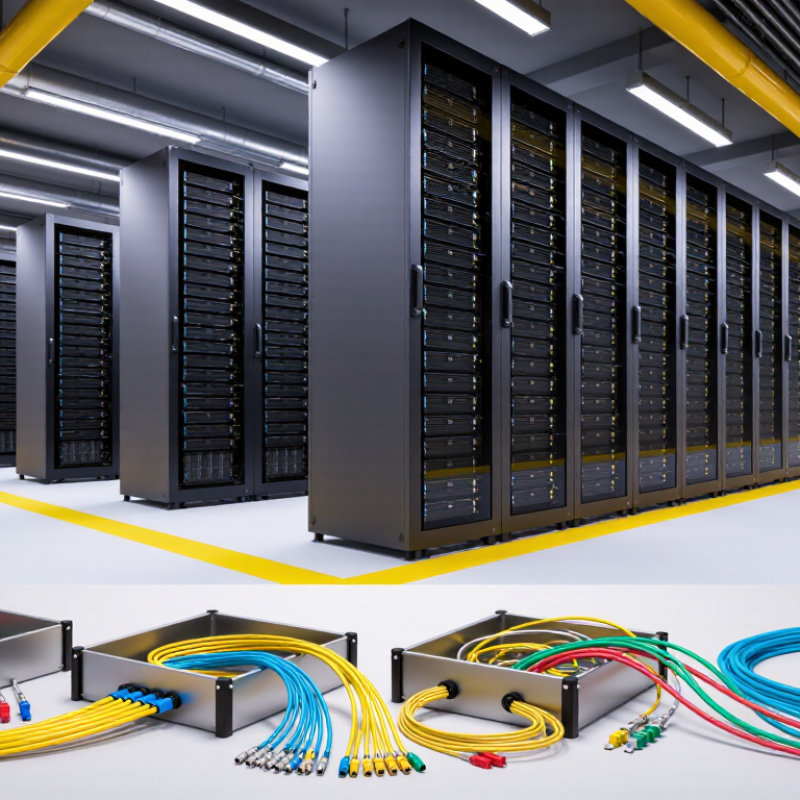
Indoor fiber cable is a protected optical cable designed for building interiors. It sends data as pulses of light through glass or plastic fibers. Most indoor designs use a tight buffer, a flexible jacket, and strength members. These layers protect the fiber during pulling, routing, and everyday movement. The cable is lighter than many outdoor types. It is not automatically suitable for every indoor space. Plenum and riser areas may require different fire-performance ratings. Check the rating.
It is used inside offices, homes, schools, hospitals, factories, and data centers. Typical links connect communication rooms with switches, servers, wireless access points, and security systems. In a hospital corridor, fiber can carry large imaging files without electromagnetic interference. In an office ceiling, it can connect floors across a building backbone. Apartment buildings also use it for high-speed internet distribution. These examples show its value. They also expose a common mistake: treating every building route as identical.
When choosing indoor fiber cable in 2026, check the core count, fiber type, bend radius, jacket rating, and connector plan. Single-mode suits long building links, while multimode can fit shorter, high-speed runs. Measure pathways before ordering. Not every route. A tight corner can damage performance, even when the cable looks fine. Field checks should include label verification, end-face inspection, and optical-loss testing. More bandwidth is not always better. My early planning would have benefited from leaving more spare fibers. Plan for change. Real projects change, and neat drawings do not predict every move.
Choosing indoor fiber cable in 2026 starts with the network’s distance, speed, and upgrade plan. OECD Broadband Statistics for December 2023 reported that fiber represented about 42% of fixed broadband connections across member economies. That growth affects indoor cabling choices. Single-mode OS2 suits long risers, campus links, and future high-speed upgrades. Multimode OM4 remains practical for shorter data-center runs, especially where transceivers and distances are already defined.
Core design matters just as much. A two-core duplex cable may serve one link, but it leaves little room for maintenance or expansion. In real installations, 12-fiber or 24-fiber trunks often provide better density and easier patching. Add spare cores. Twenty-five percent is a sensible starting point, though crowded buildings may need more. ITU-T G.657 recommendations support bend-tolerant fibers for tight pathways, but “bend-insensitive” does not mean bend-proof. Poor routing can still raise loss.
Tight-buffered cable is easier to terminate indoors and works well in short, accessible pathways. Loose-tube designs can offer stronger protection, but they may complicate termination and consume more space. Check ISO/IEC 11801 performance classes, fire ratings, connector compatibility, and measured insertion loss before purchasing. I have seen projects choose maximum core counts without checking tray capacity. That is an expensive mistake. Choose for today, but leave a realistic path for tomorrow.
Compare the typical standardized Ethernet reach of common indoor fiber types. Multimode fiber is suited to short- and medium-distance data-center links, while single-mode OS2 supports much longer campus and building-backbone connections.
How to use this chart: Choose OM3, OM4, or OM5 for high-density short-reach links using multimode optics. Choose OS2 when the design requires long-distance reach, future network expansion, or fewer distance limitations. For core design, duplex connectivity generally requires two fibers per link, while parallel-optics applications such as 40 Gb/s and 100 Gb/s SR4 commonly use eight fibers.
Distances represent commonly specified maximum link reaches for Ethernet optics over each fiber family. Actual results depend on transceiver selection, connector loss, splice loss, installation quality, and the total channel budget.
Choosing an indoor fiber cable starts with its jacket and installation route. PVC jackets are practical and flexible, but they may produce more smoke during burning. Low-smoke, zero-halogen jackets reduce corrosive gases in enclosed rooms. IEC 60754-1 evaluates halogen acid gas, while IEC 61034-2 measures smoke density. These tests measure different risks. One label cannot replace both.
Fire rating must match the building pathway. Plenum-rated cable suits air-handling spaces, where smoke can travel quickly. Riser-rated cable fits vertical shafts between floors. General-purpose cable belongs only in permitted areas. In North American projects, the NFPA 262 test supports plenum classifications, while local codes define acceptable use. NFPA’s Fire Loss in the United States During 2023 reported about 1.39 million fires and approximately 3,790 civilian deaths. Cable is rarely the only cause, yet poor jacket selection can worsen smoke movement. A tidy installation can still be the wrong installation.
Tips: Check the pathway before choosing the cable. Ask for the exact flame and smoke test report, not only “fire resistant.” Confirm bend radius, pulling tension, temperature range, and connector compatibility. For hospitals, tunnels, and crowded public buildings, compare LSZH performance with local fire requirements. I would also question vague “low-smoke” claims. They sound reassuring, but the test method may be missing. Cables should be reviewed with the building code, engineer, and installer before purchase.
| Indoor Application | Preferred Jacket or Cable Type | Applicable Fire Classification or Test | Smoke and Halogen Characteristics | Typical Fiber Options | Main Advantages | Important Limitations |
|---|---|---|---|---|---|---|
| General indoor horizontal cabling in non-plenum spaces | PVC or other listed thermoplastic indoor jacket | North American installations commonly use OFNR where a riser rating is required. Local code and the cable listing must be confirmed. | Standard PVC can produce smoke and hydrogen chloride gas when exposed to fire. | OS2 single-mode; OM3 or OM4 multimode | Cost-effective, widely available, flexible, and suitable for many ordinary indoor pathways. | May not be acceptable in air-handling spaces or locations requiring low-smoke, halogen-free performance. |
| Vertical riser shafts and floor-to-floor pathways | Riser-rated indoor cable | OFNR under the NEC framework; the cable must be listed and marked for riser use. | Fire-propagation performance is higher than general-purpose cable, but the jacket may still contain halogens unless specifically designed as LSZH. | OS2; OM3; OM4 | Designed to limit flame spread in vertical pathways and riser applications. | OFNR is not automatically suitable for plenum spaces. Do not substitute a lower-rated cable where a higher rating is required. |
| Plenum, air-handling, and raised-floor return-air spaces | Plenum-rated low-smoke jacket, commonly fluoropolymer-based or specially formulated plenum PVC | OFNP under the NEC framework; installation commonly requires compliance with the NFPA 262 plenum fire and smoke test. | Must meet stricter flame-spread and smoke requirements than riser-rated cable. Halogen-free status is not implied by OFNP alone. | OS2; OM3; OM4; OM5 where supported by the network design | Suitable for air-handling spaces with stringent flame and smoke requirements. | Usually more expensive and may be less flexible or have a larger minimum bend radius than standard indoor cable. |
| Public buildings, transport facilities, hospitals, and data centers | LSZH indoor cable, or CPR-classified cable where European construction-product requirements apply | Typical LSZH verification includes IEC 60332-1-2 for flame propagation, IEC 60754 for halogen-acid gas, and IEC 61034 for smoke density. CPR performance is expressed by Euroclass, such as B2ca, Cca, or Dca, with additional smoke, flaming-droplet, and acidity classifications where applicable. | Low smoke and low corrosive-gas emissions when the cable is correctly tested and certified. “LSZH” alone is not a complete fire classification. | OS2; OM3; OM4 | Reduces smoke obscuration and corrosive gas exposure during a fire; suitable for many occupied or evacuation-sensitive areas. | LSZH does not automatically satisfy a specific NEC plenum or riser requirement. Confirm both the fire test and the installation code. |
| Short indoor patching and equipment-cabinet connections | Indoor duplex, simplex, or breakout patch cable with a jacket selected for the local pathway | Use the required OFNP, OFNR, LSZH, or other local classification according to the installation location. | Depends on the jacket formulation and certification. | OS2 for single-mode links; OM3 or OM4 for multimode links | Easy termination, high flexibility, and convenient routing inside cabinets and racks. | Small-diameter patch cable may have lower mechanical protection and should not be used as a substitute for a ruggedized distribution cable. |
| High-density data-center backbone and cross-connect areas | Micro-distribution, ribbon, or high-density breakout cable with the required fire rating | OFNP or OFNR in North American projects, or the specified IEC/CPR classification in applicable markets. | Must be checked against the selected jacket and fire classification; high fiber count does not determine fire performance. | OS2; OM4; OM5 for applications specifically designed for it | High fiber count, efficient rack utilization, and faster mass termination for structured cabling. | Some high-density designs require special breakout kits, bend management, and careful installation practices. |
| Jacket Category | Typical Use | Fire and Smoke Behavior | Halogen Content | Common Compliance References | Selection Priority |
|---|---|---|---|---|---|
| General-purpose PVC | Ordinary indoor spaces where no higher fire rating is required | Basic flame resistance depends on the cable design; it may generate relatively more smoke and corrosive gas than LSZH materials. | Usually halogen-containing | Product-specific national or regional cable standards; verify the actual marking and listing. | Basic indoor use |
| Riser-rated jacket | Vertical shafts and riser pathways | Designed to limit flame propagation in vertical installations. | May contain halogens unless separately specified as LSZH. | OFNR and the applicable riser fire test under the local electrical or building code. | Riser fire rating |
| Plenum-rated jacket | Air-handling spaces, plenum ceilings, and raised-floor return-air spaces | Designed for stricter flame-spread and smoke-release limits than riser-rated cable. | Not necessarily halogen-free | OFNP and the applicable plenum fire and smoke test, commonly NFPA 262 in North American projects. | Highest NEC pathway rating |
| LSZH jacket | Occupied buildings, transportation areas, data centers, and projects specifying low smoke and low corrosive emissions | Low smoke and low halogen-acid gas emissions when tested to the required standards. | Designed to be low-halogen or halogen-free, depending on the product specification. | IEC 60332-1-2, IEC 60754, IEC 61034, and applicable CPR classification where required. | Low-smoke safety |
| Plenum-rated LSZH cable | Projects requiring both a plenum pathway rating and low-smoke, low-corrosive-gas properties | Must satisfy the required plenum fire/smoke test and the applicable LSZH tests; one label does not replace the other. | Low-halogen or halogen-free, subject to product certification | Specified NEC/UL or regional plenum listing plus the applicable IEC LSZH test standards. | Combined fire and emission control |
| Fiber Type | Standardized Core/Cladding Size | Typical Indoor Network Role | Common Wavelengths | Key Selection Consideration |
|---|---|---|---|---|
| OS2 single-mode fiber | Approximately 9/125 µm | Building backbone, campus links, data-center interconnection, and long-reach indoor links | Commonly 1310 nm and 1550 nm; other wavelengths may be used by specific transceivers | Best choice when long distance, future upgrades, or high-capacity single-mode optics are expected. |
| OM3 multimode fiber | 50/125 µm | Short-range data-center and building backbone links | Commonly 850 nm | Suitable for many short-reach links; verify transceiver reach and link budget. |
| OM4 multimode fiber | 50/125 µm | Higher-performance short-reach data-center and enterprise links | Commonly 850 nm | Higher modal bandwidth than OM3, which can support longer distances for compatible applications. |
| OM5 multimode fiber | 50/125 µm | Specific short-reach applications using wideband multimode transmission | Designed for multiple short-wavelength bands, depending on the transmission system | Use only when the network equipment and architecture are designed to benefit from wideband multimode operation. |
| Check Item | What to Confirm | Why It Matters | Recommended Decision |
|---|---|---|---|
| Pathway location | Whether the cable will be installed in a general space, riser, plenum, shaft, raised floor, or air-handling space | The pathway can determine the minimum legally acceptable fire rating. | Identify the local code classification before selecting the jacket. |
| Regional code | NEC-based OFNP/OFNR requirements, IEC requirements, CPR requirements, or other national regulations | Fire terminology is not interchangeable across jurisdictions. | Use the classification required by the authority having jurisdiction. |
| Smoke and corrosive gas requirements | Whether the project specifies LSZH, smoke limits, acidity, or conductivity limits | Fire safety may require more than flame-spread control. | Review test reports for IEC 60332, IEC 60754, IEC 61034, or the specified regional tests. |
| Fiber count and construction | Required fiber count, distribution or breakout design, connectorization method, and rack density | Cable construction affects installation time, bend management, and space usage. | Choose a cable structure that matches termination and pathway conditions. |
| Minimum bend radius | Loaded and unloaded bend-radius values stated on the cable datasheet | Excessive bending can increase attenuation or damage the cable. | Respect the manufacturer’s bend-radius and pulling-tension limits. |
| Mechanical protection | Exposure to pulling force, crushing, abrasion, rodents, or frequent moves | Fire rating does not indicate mechanical robustness. | Use suitable armor, strength members, or conduit where the environment requires it. |
| Temperature and installation environment | Storage, installation, and operating temperature ranges; moisture and chemical exposure | Indoor cables have product-specific environmental limits. | Verify the complete datasheet rather than assuming all indoor cables share the same rating. |
| Certification evidence | Permanent cable marking, listing information, test standard, construction type, and lot or product documentation | Marketing terms alone do not prove compliance. | Request current declarations, test reports, and certification records for the exact cable construction. |
Installation conditions should shape cable construction, not merely cable price. A crowded ceiling may require compact, flexible cable with controlled bend performance. The Fiber Optic Association recommends a bend radius of at least 10 times the cable diameter during installation and 15 times afterward. That difference matters when a cable is pulled around a sharp tray corner. I have seen clean-looking installations fail because installers measured space, not movement.
Plenum spaces demand cables with suitable flame and smoke performance under local electrical codes. Riser routes need different construction from horizontal pathways. The National Fire Protection Association’s 2025 electrical code identifies these spaces separately, so one indoor cable design cannot safely fit every building zone. For damp utility rooms, select water-blocking protection only when the pathway actually faces moisture. Extra protection can increase diameter and reduce usable tray capacity.
Temperature also changes handling. IEC 60794-2 testing commonly evaluates indoor cables across ranges near -20°C to 60°C, but site conditions can be harsher near air handlers or unconditioned shafts. Check the manufacturer’s tested range, pulling tension, and crush resistance. TIA-568.3-E also emphasizes link loss testing after installation. Do not trust visual inspection alone. A small mistake remains invisible until certification testing. My own preference is cautious, perhaps too cautious: leave documented slack, photograph every transition, and question any route that forces the cable below its stated bend radius.
Choosing indoor fiber cable in 2026 requires more than comparing prices per meter. Start with performance requirements. Single-mode fiber suits long campus links, while multimode fiber usually fits shorter building networks. Check bandwidth, transmission distance, insertion loss, return loss, and the cable’s bend radius. A tight ceiling tray can expose weak designs quickly. Leave extra length for service loops.
Compatibility deserves equal attention. Match the fiber type with transceivers, patch panels, connectors, and existing splice equipment. Verify connector polish and polarity before ordering. For riser or plenum spaces, confirm the correct fire-resistance rating and local installation requirements. Cable diameter also matters. A thick jacket may resist damage, but it can crowd a compact enclosure. Small details become expensive during installation.
Budget comparisons should include labor, testing, replacement risk, and future capacity. A cheaper cable may need more careful routing or create higher loss across several connections. Ask for test reports, attenuation limits, operating temperature, and traceable manufacturing information. I once underestimated the value of pull strength and paid for avoidable rework. That mistake still influences my selection process. Do not over-specify every link, either. Paying for unused performance can weaken the project’s practical return. A clear cable schedule and acceptance test usually protect the budget better than a low purchase price.
The jacket affects flexibility, smoke, and corrosive gas during a fire. PVC is practical, but it may produce more smoke. Low-smoke, zero-halogen jackets can reduce corrosive gases in enclosed rooms.
Not much without a test method. Smoke density and halogen acid gas require different evaluations. One label cannot replace both.
Use a plenum-rated cable when local codes require it. Smoke can travel quickly through these spaces. Check the exact flame and smoke report.
Riser-rated cable suits vertical shafts between floors. It is not automatically suitable for air-handling spaces. The pathway decides.
No. Plenum, riser, and general-purpose routes have different requirements. A tidy installation can still be the wrong installation.
Plan for at least ten times the cable diameter during installation. Afterward, allow about fifteen times the diameter. Sharp tray corners can create hidden damage.
Check pulling tension, crush resistance, temperature range, bend radius, and connector compatibility. Leave documented slack. Photograph each transition.
No. Small losses may remain invisible. Perform link loss testing after installation. I sometimes prefer excessive checking, but guessing is worse.
No. Use water-blocking protection only where moisture is realistic. Extra layers increase cable diameter and reduce tray capacity.
Request complete flame, smoke, temperature, and mechanical test information. Compare it with local building requirements. “Fire resistant” alone is too vague.
Choosing the right Indoor Fiber Cable in 2026 starts with understanding where it will be installed, such as data centers, office networks, telecommunications rooms, or residential buildings. The decision should consider the required fiber type, core count, transmission distance, and network architecture. Single-mode fiber may suit long-distance, high-bandwidth links, while multimode fiber can be practical for shorter connections. Core design and cable structure should also match future expansion plans and installation space.
Cable jacket and fire rating are equally important, especially in enclosed or shared buildings. Select materials that meet local safety requirements and suit conditions such as tight bends, frequent movement, moisture, temperature changes, or high cable density. Before purchasing, compare attenuation, bandwidth, connector compatibility, bend performance, pulling strength, ease of termination, and labeling options. A balanced evaluation of performance, installation efficiency, lifecycle reliability, and total cost will help ensure that the cable supports current requirements while leaving room for future upgrades.

KOCENT OPTEC