Choosing the best Fiber Optic Cleaner from China requires more than comparing prices or product photographs. Fiber networks now support data centers, 5G backhaul, cloud services, and increasingly dense FTTH installations. Grand View Research’s 2024 Fiber Optic Cable Market report identifies continuing infrastructure expansion worldwide. More connections also mean more end-face inspections, cleaning cycles, and maintenance risks.
Cleanliness is not a minor detail. It affects insertion loss, return loss, signal stability, and connector life. Jim Hayes, president of the Fiber Optic Association, has stated, “The most common cause of problems in fiber optic networks is contamination.” This practical warning aligns with IEC 61300-3-35, which defines inspection requirements for connector end faces. A reliable Fiber Optic Cleaner should remove dust, oil, and microscopic residue without scratching polished surfaces. It should also provide consistent results across repeated uses.
China offers many cleaning pens, cassette cleaners, swabs, and automated systems. Quality varies sharply. A low-cost tool may look acceptable while leaving lint inside an adapter. That failure can appear weeks later. Not every supplier publishes meaningful test evidence. This matters.
The stronger manufacturers provide inspection images, production traceability, material specifications, and compatibility details for LC, SC, MPO, and other interfaces. Independent test reports are more useful than marketing claims. Buyers should examine cleaning performance, cycle life, packaging, and after-sales support together. This article compares leading Chinese options through that practical lens. No cleaner wins every field condition, and that limitation deserves honest attention.
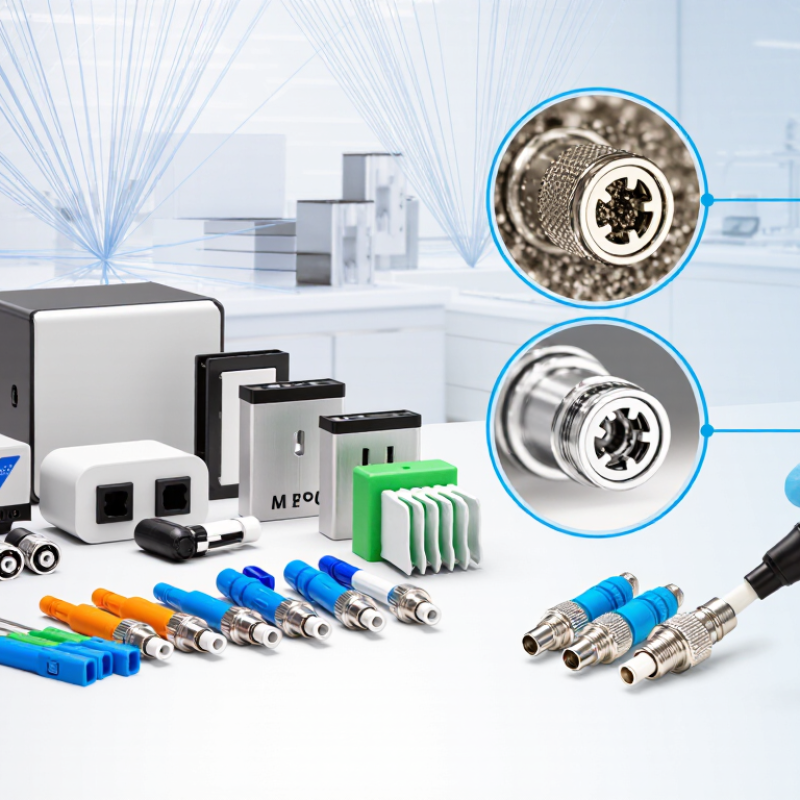
A fiber optic cleaner removes dust, oil, and tiny particles from connector endfaces. These contaminants can increase insertion loss and weaken signal stability. The tool usually uses a dry, antistatic cleaning surface. Some designs clean one connector at a time, while others serve multiple connector types. The best choice depends on connector geometry, cleaning volume, and maintenance conditions.
Clean connectors matter.
In practical network work, a technician should inspect the endface before cleaning. A single visible particle may sit directly across the optical core. After cleaning, inspection should happen again. This simple step confirms that contamination was removed instead of moved. Never rely on a cleaner alone when a connector remains scratched, wet, or visibly damaged. Cleaning cannot repair a damaged endface.
When comparing a fiber optic cleaner from China, examine manufacturing consistency, packaging, traceability, and cleaning performance. Reliable suppliers should provide clear operating instructions and relevant quality records. The cleaning tape should advance smoothly without leaving fibers or residue. The housing should also protect the internal cleaning material during storage. In my view, low cost is useful only when performance remains repeatable. A cheaper tool may waste time if it needs several passes. That is an easy detail to overlook. Even experienced technicians can clean too quickly, especially during busy installation work. I still think inspection discipline matters more than appearance, because a polished housing cannot guarantee a clean optical connection.
Chinese manufacturers produce several practical types of fiber optic cleaners for different connector designs and working conditions. The most common option is the cassette cleaner, which uses a replaceable dry cleaning tape. It suits repeated maintenance on standard single-fiber connectors. A technician can hear a soft click while sliding the connector across the cleaning surface. This small signal helps confirm proper operation.
Pen-style cleaners are also widely made in China. They use a narrow cleaning tip for adapters, patch panels, and recessed connectors. Some models support 1.25-millimeter tips, while others fit 2.5-millimeter connectors. MPO and other multi-fiber cleaners use a wider head with controlled pressure. They clean several fiber end faces in one movement. That saves time in high-density cabinets, but alignment still matters.
Chinese suppliers also make reel cleaners, swab-based kits, and wet-dry cleaning sets. Reel cleaners are compact and convenient for field work. Swabs can reach unusual surfaces, although poor technique may leave lint or solvent marks. Wet-dry kits combine cleaning fluid with lint-free wipes for stubborn oil. In practice, dry cleaning is often safer for routine dust. I have found that no single cleaner fits every installation. Product descriptions sometimes sound too confident. Inspecting the end face with a fiber microscope remains necessary before testing or connection.
What Is the Best Fiber Optic Cleaner from China?
How to Compare Chinese Fiber Optic Cleaners by Performance
Performance matters more than origin when comparing Chinese fiber optic cleaners. In field work, I check how evenly each tool removes dust, oil, and fine residue. A clean end face should show no visible film under inspection. The cleaner should also apply steady pressure without scratching polished surfaces. Small differences matter.
Test repeatability is essential. I run the same connector through several cleaning cycles, then inspect it with a fiber microscope. Good results should remain consistent, not appear only during the first test. Check the cleaning tape length, replacement cost, connector compatibility, and operating temperature. Ask suppliers for inspection records, material details, and test samples. Claims without evidence deserve caution. I have trusted attractive specifications before, and that was not always wise.
Tips: Compare five or more samples. Record insertion force. Inspect before and after cleaning. Check for lint. Test common connector types. Consider operator training, because technique can change results. A simple comparison sheet helps reveal weak points. Do not judge performance from price alone.
| Cleaner Type | Typical Connector Compatibility | Cleaning Performance | Typical Service Life | Residue and Particle Control | Operational Advantages | Limitations | Best Performance Rating |
|---|---|---|---|---|---|---|---|
| Cassette Cleaner | LC, SC, MU, MPO/MTP and other connectors when the correct guide or adapter is installed | Dry, tape-based cleaning; removes dust, loose particles, and light oil contamination from connector end faces | Commonly about 400–500 cleaning operations, depending on tape length and model design | Low lint generation when the cleaning tape is properly tensioned; no liquid residue | Stable contact pressure, clear tape indexing, and good repeatability for production or field work | Requires compatible guides or adapters; less convenient for very tight or recessed areas | ★★★★★ |
| One-Click Pen Cleaner | Usually designed for 1.25 mm or 2.5 mm ferrules; some versions support MPO/MTP connectors | Dry, non-abrasive cleaning tip removes dust, fingerprints, and light contamination with a single click | Typically about 500–800 clicks, subject to the internal cleaning tape and mechanism | Low residue when the tip is clean and the recommended number of clicks is used | Compact, fast, and easy to use in patch panels, splice trays, and installation sites | One tip may not support every connector type; effectiveness decreases when heavy grease is present | ★★★★☆ |
| MPO/MTP Array Cleaner | MPO/MTP multi-fiber connectors, including pinned and unpinned versions when specified by the tool | Cleans multiple fiber end faces in one operation and helps reduce repeated handling of array connectors | Commonly about 500 cleaning operations, with some designs offering replaceable cleaning cartridges | Good control of loose particles across the connector array; results depend strongly on alignment accuracy | High productivity for data-center cabling and high-density optical distribution frames | Not suitable for standard simplex connectors; incorrect alignment can leave contamination on individual fibers | ★★★★★ |
| Lint-Free Cleaning Swab | LC, SC, FC, ST, MU, transceiver ports, and recessed adapters with the correct swab diameter | Effective for localized cleaning and removal of fingerprints or oil when used with approved cleaning fluid | Single-use; one swab should normally be used for one cleaning task to avoid cross-contamination | High cleanliness when made from low-lint polyester or foam; poor-quality swabs may leave fibers or extractables | Reaches narrow adapters, transceiver cages, and hard-to-access surfaces | Requires careful handling and may transfer contamination if reused; liquid compatibility must be checked | ★★★★☆ |
| Lint-Free Wipe | Connector housings, tools, work surfaces, and exposed ferrules; not a replacement for a precision end-face cleaner | Useful for removing dust, oil, and cleaning-fluid residue from external surfaces | Single-use or limited-use, depending on contamination level and wipe material | Low-lint performance depends on fabric construction, edge treatment, and packaging quality | Low cost and useful as a preparation step before end-face inspection | Large wipes can damage or contaminate end faces if folded or reused incorrectly | ★★★☆☆ |
| Cleaning Pen with Wet-and-Dry Process | Commonly LC, SC, FC, ST, and other connector formats with matching cleaning tips | Uses a solvent-compatible wet step followed by a dry step to address heavier oil or grease contamination | Usually about 100–400 applications per replaceable cleaning head or cartridge | Can provide strong contamination removal, but incomplete drying may leave solvent marks | Useful for difficult contamination that a dry cleaner cannot remove in one pass | Requires solvent control, correct drying, and careful storage; not ideal for routine high-volume cleaning | ★★★★☆ |
| Ultrasonic Cleaning System | Removable connector parts and selected components approved by the connector or equipment manufacturer | Can remove stubborn contamination from compatible parts through liquid immersion and ultrasonic agitation | Equipment-based; cleaning solution and filtration system require regular maintenance | Potentially high cleaning capability, but liquid residue and particle redeposition must be controlled | Suitable for controlled workshop or factory processes involving removable components | Not normally suitable for assembled, active, or sealed optical modules; requires rinsing and drying validation | ★★★☆☆ |
| Selection guidance: For general LC, SC, and FC field maintenance, a dry cassette cleaner or a compatible one-click pen cleaner is usually the most practical choice. For MPO/MTP systems, use a dedicated array cleaner. Verify connector compatibility, cleaning-cycle life, lint level, ESD claims, packaging quality, and end-face results under a microscope. A connector should be inspected after cleaning according to the applicable end-face inspection procedure, such as IEC 61300-3-35, before mating. | |||||||
What Is the Best Fiber Optic Cleaner from China?
The best fiber optic cleaner is defined by results, not packaging or price. During field work, I have seen a single dust particle cause unstable optical readings. Small detail. Big consequence. A reliable cleaner should remove dust, oil, and residue without scratching the end face. Its cleaning fabric must stay lint-free after repeated wipes. Dry cleaning is usually safer because liquid residue can remain inside adapters.
Compatibility also matters. A professional tool should support LC, SC, FC, MPO, and other common connector types. The cleaning head needs controlled contact pressure and clear tactile feedback. It should clean both connector plugs and adapter ports. IEC 61300-3-35:2022 emphasizes end-face inspection, contamination control, and repeatable acceptance practices. Therefore, the cleaner should work with an inspection microscope, not replace inspection. I once trusted a clean-looking connector too quickly. That was a mistake.
The 2024 ITU Facts and Figures report estimates that 5.5 billion people use the Internet worldwide. This expanding connectivity increases the need for dependable fiber maintenance tools. For Chinese-made products, buyers should request cycle-life data, packaging dates, cleaning-width specifications, and factory quality records. A sealed package protects the cloth from humidity and airborne particles. Anti-static construction is useful in dense data rooms. A counter helps technicians track usage, although counters can fail and need checking. Good design is practical, measurable, and slightly boring. That is often a strength.
Key features that define a high-quality fiber optic cleaning tool
The chart presents a product-neutral evaluation model using a 100-point weighting system. Cleaning effectiveness receives the highest weight because dust, oil, and residue can increase insertion loss and return loss. Connector compatibility, anti-static performance, cleaning capacity, contamination control, and ergonomics are also important when selecting a fiber optic cleaner.
The framework is aligned with common fiber-optic inspection and cleanliness practices, including end-face inspection and contamination prevention principles described in IEC 61300-3-35. It is not a comparison of brands or manufacturers.
Choosing a reliable Chinese fiber optic cleaner supplier requires more than comparing prices.
MarketsandMarkets estimated the global fiber optics market at about USD 8.3 billion in 2023, with strong growth expected through 2028. This expansion increases supplier choices, but quality can vary widely.
Ask for measurable evidence. A dependable supplier should provide test data for insertion loss, cleaning cycles, residue, and dust removal. Request samples before placing a large order. Use them on LC, SC, and MPO connectors under real installation conditions.
Check whether the factory follows ISO 9001 procedures and tests products against relevant IEC requirements. Lot numbers, production dates, and traceable inspection records also matter. A polished website proves little. I have seen attractive samples perform poorly after repeated use.
Tips: Confirm the cleaning method first. Dry cleaners should not leave fibers or lint. Wet systems need controlled solvent packaging. Ask about sealed storage, operator training, replacement parts, and export packaging. Compare the supplier’s response time with its technical accuracy. Fast replies are useful, but vague answers are warning signs. Clarify minimum order quantities, sample fees, lead times, and failure-handling procedures in writing. One overlooked detail is compatibility with connector end faces and adapter geometry. Some suppliers may claim universal performance without sufficient testing. That claim deserves careful review.
Compare dust, oil, and residue removal under the same conditions. Inspect each end face before and after cleaning. Check for visible film, scratches, and lint. Repeat the test several times. One successful wipe proves very little.
A reliable cleaner applies steady pressure and protects polished surfaces. Its fabric should remain lint-free during repeated use. It should remove residue without leaving liquid behind. Small particles matter.
Repeatability shows whether performance remains stable after many cleaning cycles. Run the same connector through several wipes. Inspect it with a fiber microscope each time. Early results can look better than later ones. I have trusted the first test before. That was not wise.
Check support for LC, SC, FC, MPO, and other common connector types. The tool should clean plugs and adapter ports. Confirm compatibility with actual end-face shapes. “Universal” claims need evidence.
Dry cleaning usually reduces the risk of liquid residue inside adapters. Wet systems require controlled packaging and careful handling. Check whether fibers, moisture, or solvent traces remain. Dry is not automatically perfect.
Request test records for dust removal, residue, cleaning cycles, and insertion force. Ask for samples, lot numbers, production dates, and material details. Quality records should be traceable. A polished website is not proof.
Compare at least five samples using common connectors. Record insertion force and cleaning-cycle results. Inspect each connector with a microscope. Check sealed packaging after storage. A simple table reveals weak points.
Confirm minimum order quantities, sample fees, lead times, replacement parts, and failure procedures. Ask about operator training and export packaging. Compare response speed with technical accuracy. Fast replies can still be vague.
Price alone cannot prove quality. A cheaper tool may leave lint or fail after repeated use. An expensive tool may also disappoint. Measure results instead. Slightly boring design is often good.
Do not assume a clean-looking connector is truly clean. Microscopic dust can disturb optical readings. Do not skip inspection after cleaning. Technique also changes results. Human hands are part of the test.
A Fiber Optic Cleaner is an essential maintenance tool designed to remove dust, oil, and other contaminants from fiber optic connectors before installation or testing. Clean connector end faces help reduce signal loss, prevent connection problems, and protect sensitive network equipment. Chinese manufacturers commonly offer several types, including one-click cleaners, cassette-style cleaners, swab-based tools, and combined cleaning kits for different connector shapes and working environments.
To identify the best Fiber Optic Cleaner, buyers should compare cleaning effectiveness, compatibility, durability, ease of use, portability, and the number of cleaning cycles provided. A reliable product should clean consistently without scratching or leaving residue, while offering clear operating instructions and stable quality control. When choosing a Chinese supplier, consider manufacturing experience, inspection procedures, customization capability, communication, packaging, delivery performance, and after-sales support. Requesting samples and technical details before placing a large order can help confirm that the cleaner meets practical maintenance and network installation requirements.

KOCENT OPTEC